Hemp Juice: The Fresh, Whole-Plant Alternative to CBD and THC Drinks
Many products sold as “hemp drinks” begin as flavored water, soda, or seltzer. A manufacturer then adds a measured amount of CBD, THC, or another cannabinoid to the finished beverage.
Fresh hemp juice is something entirely different.
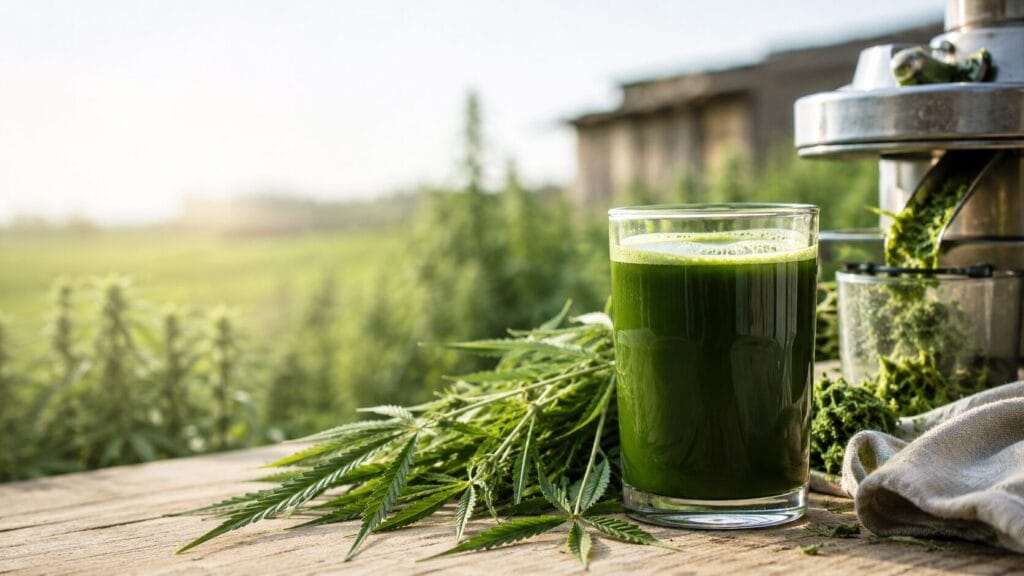
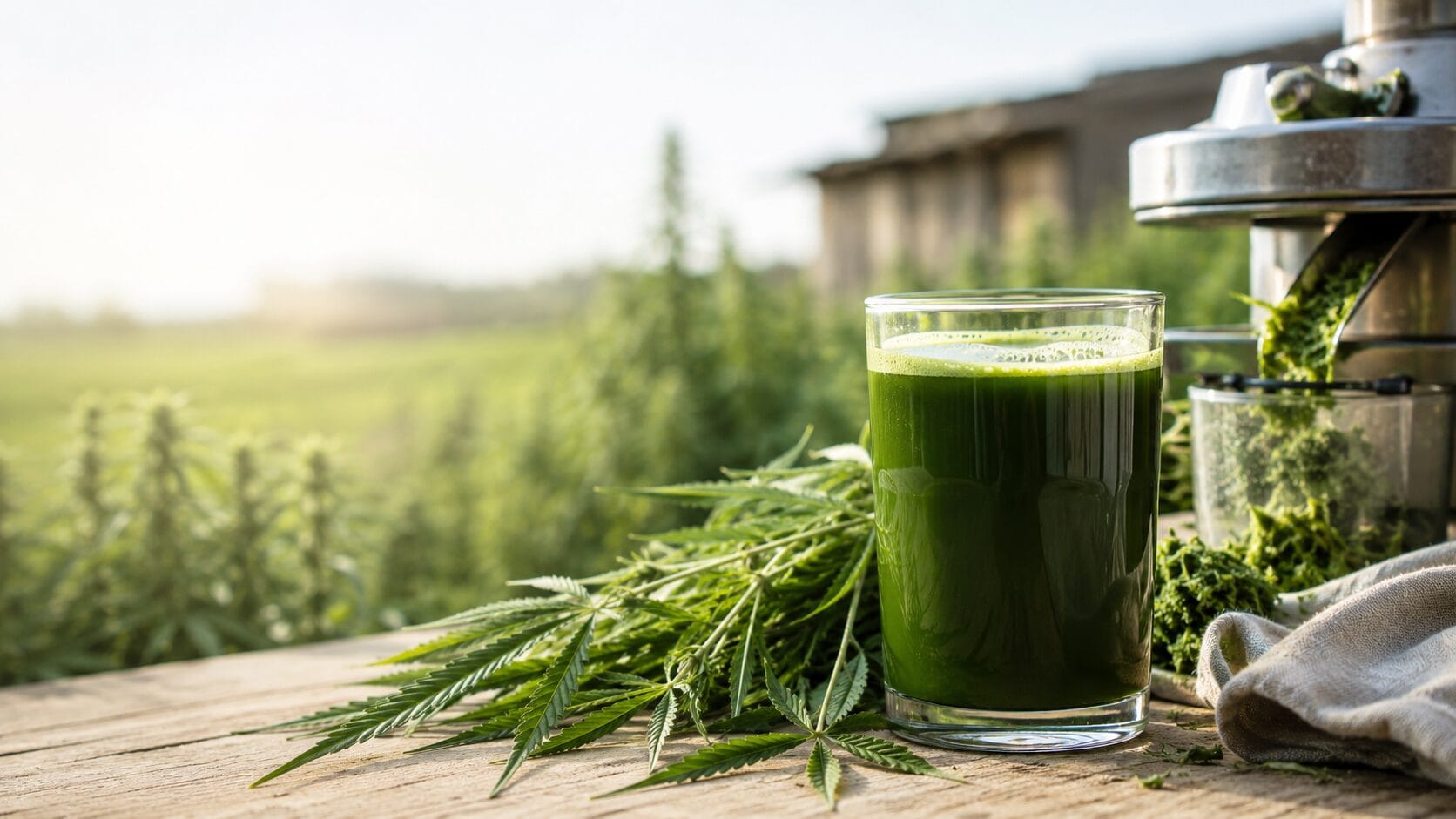
It begins with the living plant. Freshly harvested hemp leaves are cold-pressed to produce a deep green, plant-forward juice containing the naturally occurring nutrients, raw cannabinoids, and other compounds found within the leaf.
Instead of recreating hemp by adding one isolated ingredient to a beverage, hemp juice lets the plant speak for itself.
How Fresh Hemp Juice Is Made
Fresh hemp juice is made by harvesting green leaves directly from the hemp plant and feeding them through a cold press. Mechanical pressure separates the juice from the more fibrous parts of the leaf without the high temperatures used in smoking, cooking, or many extraction processes.
Avoiding high heat matters because cannabinoids occur differently in a fresh plant than they do in many processed products. In freshly harvested hemp and cannabis, cannabinoids are found primarily in their raw, acidic forms, including:
- CBDA, the natural precursor to CBD
- THCA, the natural precursor to delta-9 THC
- CBGA, a precursor the plant uses to produce several other cannabinoids
When cannabinoids are exposed to sufficient heat, they undergo a process called decarboxylation. This converts CBDA into CBD and THCA into delta-9 THC. Cold pressing avoids deliberately applying that heat, helping the juice remain closer to the natural chemical profile of the freshly harvested plant.
This is not conventional cannabinoid extraction. There are no solvents required to isolate and concentrate a single compound. Fresh leaves go into the press, and fresh green hemp juice comes out.
A Plant-Based Nutrition Profile
Hemp leaves are more than a source of cannabinoids. They are green plant material containing protein, amino acids, vitamins, minerals, fatty acids, polyphenols, and other naturally occurring plant compounds.
A 2025 peer-reviewed study of young hemp leaves identified essential amino acids, polyunsaturated fatty acids, several B vitamins, vitamin E, and minerals including calcium, magnesium, phosphorus, potassium, iron, zinc, and manganese. The researchers concluded that young hemp leaves show promise as a nutritious leafy food.
Compared with familiar leafy greens such as kale and spinach, young hemp leaves contained essential amino acids in similar abundances. In the study’s comparison with previously published spinach data, young hemp leaves also contained nearly five times as much calcium, although they contained less iron than spinach.
| Nutritional category | Examples identified in hemp leaves |
|---|---|
| Vitamins | Vitamin B1, vitamin B2, vitamin B3, and vitamin E |
| Major minerals | Calcium, magnesium, phosphorus, and potassium |
| Trace minerals | Iron, zinc, manganese, copper, and silicon |
| Protein components | Protein, amino acids, and essential amino acids |
| Fatty acids | Naturally occurring unsaturated and polyunsaturated fatty acids |
| Plant compounds | Polyphenols, terpenoids, and other phytonutrients |
| Raw cannabinoids | Naturally occurring acidic cannabinoid forms, depending on the cultivar and maturity of the plant |
This is what separates a pressed plant juice from flavored water with a cannabinoid added to it. Fresh hemp juice starts with nutrient-containing leafy material and carries part of that broader plant profile into the finished drink.
The exact nutritional content of any finished hemp juice will vary according to the hemp cultivar, soil, growing conditions, age of the leaves, harvest timing, pressing method, serving size, and amount of plant material retained in the juice. The research above measured young hemp leaf tissue, not finished Western MA Hemp juice, so product-specific laboratory testing is required to establish exact quantities per serving.
Raw Cannabinoids Without an Intoxicating Experience
Fresh hemp juice naturally contains cannabinoids from the leaves, but those cannabinoids are not the same as adding activated THC to a canned beverage.
Because fresh hemp leaves have not been intentionally heated, most of their cannabinoids are expected to remain in their raw, acidic forms. Research on young hemp leaves notes that the large majority of cannabinoids in fresh leaf tissue are in acid form and are not psychoactive when consumed orally.
THCA, for example, is chemically different from delta-9 THC. It does not produce the intoxicating “high” associated with activated THC when consumed in its raw form. It must first be converted into delta-9 THC through heat, prolonged storage, or another decarboxylation process. CBD is also considered non-intoxicating.
That is why properly produced hemp juice is a non-intoxicating beverage by design. It is not a THC soda intended to create a noticeable high. It is a raw, plant-centered way to experience hemp without smoking, vaping, or consuming a conventional intoxicating edible.
Cannabinoid levels can still vary by cultivar, growing conditions, and harvest maturity. Finished products should therefore be supported by batch testing to verify their cannabinoid profile and confirm that they meet applicable requirements.
Hemp Juice Is Not CBD Seltzer
CBD seltzers, THC sodas, and other cannabinoid beverages may introduce people to individual hemp compounds, but they should not be confused with fresh hemp juice.
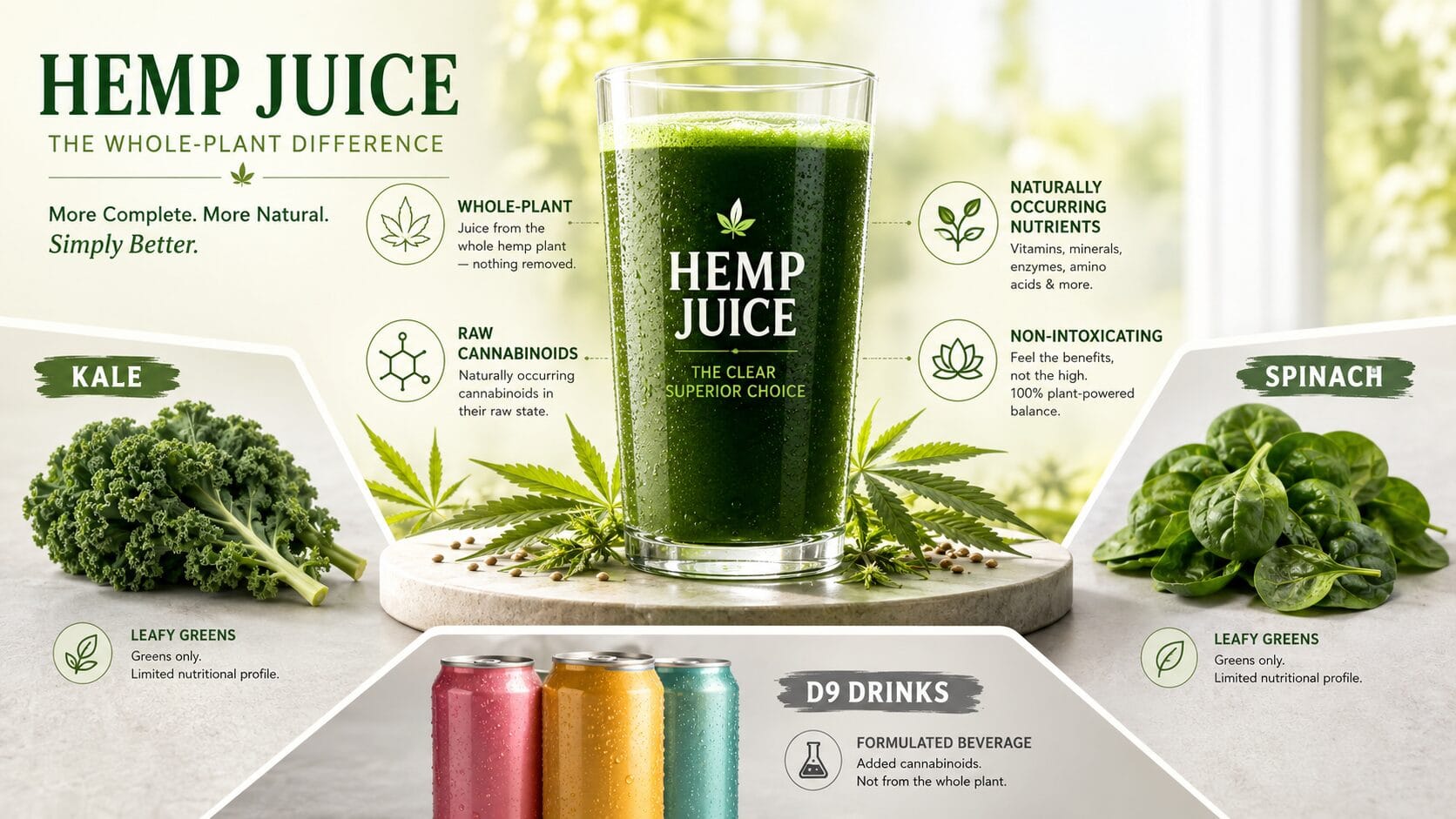
A formulated cannabinoid drink normally begins with water, carbonation, flavoring, sweetener, or another beverage base. A manufacturer then adds a measured amount of CBD, THC, or another cannabinoid, commonly in the form of an isolate, distillate, or water-dispersible emulsion.
Because the beverage begins with water rather than fresh leafy plant material, it does not inherently provide the natural vitamin, mineral, amino-acid, fatty-acid, and phytonutrient profile of a pressed green juice. Those nutrients would need to come from other added ingredients or separate fortification.
Hemp juice begins with the plant itself.
| Formulated cannabinoid drink | Fresh hemp juice |
|---|---|
| Begins with water, seltzer, or another beverage base | Begins with freshly harvested hemp leaves |
| Usually contains an added CBD, THC, or other cannabinoid ingredient | Contains cannabinoids naturally present in the leaf |
| Does not inherently contain the nutrient profile of a pressed leafy green unless separately fortified | Retains naturally occurring vitamins, minerals, amino acids, fatty acids, and phytonutrients from the hemp leaf |
| Commonly contains flavorings, sweeteners, acids, or preservatives | Naturally green, earthy, and plant-forward |
| Designed around a standardized dose of one or two cannabinoids | Reflects a broader raw, whole-plant profile |
| May be designed to produce intoxication when it contains active THC | Not formulated to produce an intoxicating experience |
| Often shelf-stable and more highly processed | Fresh, minimally processed, seasonal, and farm-direct |
This does not mean every formulated cannabinoid drink is inherently inferior. It means hemp juice belongs in a different category.
One is a beverage carrying an added cannabinoid ingredient. The other is juice made directly from the hemp plant.
A More Complete Expression of Hemp
The modern hemp industry is often reduced to three letters: CBD.
But hemp has never been just CBD.
Fresh hemp leaves contain a much broader collection of naturally occurring compounds, including raw cannabinoids, amino acids, vitamins, minerals, fatty acids, polyphenols, and terpenoids. Cold-pressed hemp juice provides a way to experience more of that natural plant matrix rather than consuming one isolated cannabinoid separated from everything around it.
This is the kind of beverage many people are looking for when they say they want a more medicinal, plant-centered relationship with hemp: not a sugary soda designed to deliver THC and not carbonated water with CBD added to it, but a fresh green juice produced directly from the plant.
Hemp juice is more faithful to the agricultural and botanical identity of hemp. It is fresh, minimally processed, non-intoxicating by design, and connected to the farm where the plants were grown.
It is best described as a whole-plant wellness beverage, not an FDA-approved medicine or a treatment for disease. The FDA has not approved the cannabis plant itself for medical use, although it has approved a limited number of prescription drugs containing specific cannabinoids. Research into raw cannabinoids and fresh hemp-leaf foods is still developing.
Hemp From the Farm, Not From a Formulation Tank
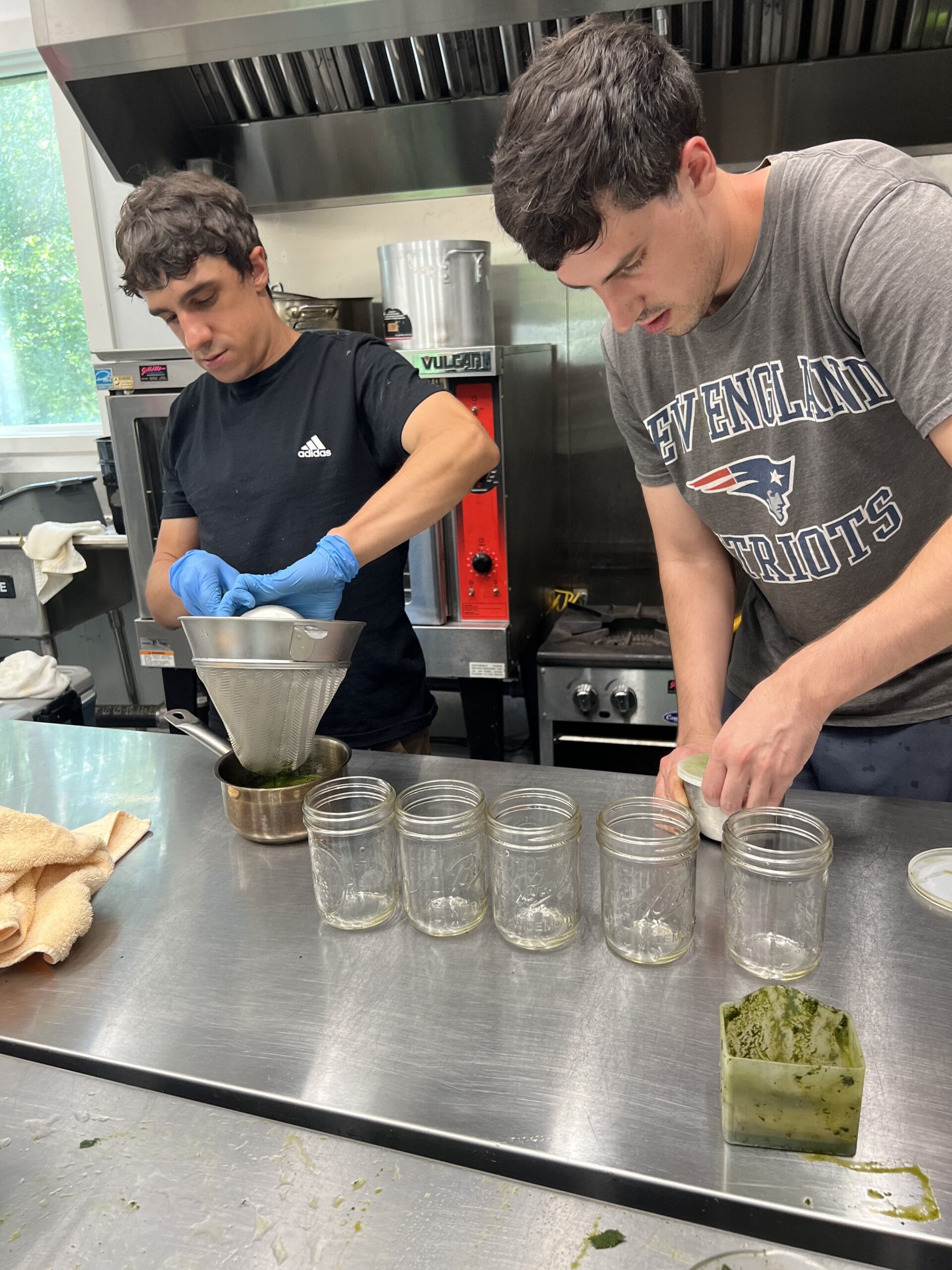
Fresh hemp juice reconnects hemp with agriculture.
It starts with healthy plants, responsible cultivation, careful harvesting, and fresh green leaves. Instead of isolating one compound and adding it to a different beverage, cold pressing allows people to consume something that remains much closer to the original plant.
For those seeking something greener, fresher, and more plant-faithful than a CBD seltzer or THC soda, hemp juice offers a distinct alternative.
It is not hemp flavoring.
It is not carbonated water with a cannabinoid added.
It is actual hemp: grown on a farm, harvested fresh, and cold-pressed into juice.
Where to Get Fresh Hemp Juice
Western MA Hemp offers customers the opportunity to contact us about obtaining fresh hemp juice directly from our farm.
Visit our Hemp Juice CSA page and fill out the form to let us know you are interested. Our team will get in touch with information about current availability and how to get hemp juice from the farm.
Because hemp juice is made from freshly harvested leaves, availability may be seasonal. Completing the form is the best way to connect with us and receive the latest information.