When to Harvest Hemp: Why Timing Matters
Summary
When is hemp ready to harvest? See how we balance resin and terpene maturity with Massachusetts weather, mold pressure, and THC compliance.
Knowing when to harvest hemp is not as simple as circling a date on the calendar months in advance. It is a decision we make by reading the plants, watching the weather, and working within a narrow legal compliance window.
Harvest too early and the flowers may not have finished building their resin, cannabinoids, and terpenes. Wait too long and the crop can lose quality to cold, rain, mold, or rising THC levels. In Massachusetts, the best biological moment, the safest weather window, and the legal harvest window do not always arrive on the same day.
That is why harvest timing is one of the most important forms of quality control on our farm.
When Is Hemp Ready to Harvest?
Hemp is ready to harvest when the flowers and resin glands have reached the desired maturity, the crop is still healthy, and it can be cut within its legal compliance window. On our Massachusetts farm, that means watching three clocks at once:
- The plant clock: Are the flowers and resin glands mature?
- The weather clock: Can the crop remain clean and healthy in the field?
- The legal clock: Has the crop been sampled, and is it still inside the permitted harvest window?
The right harvest date sits where those three conditions overlap. Waiting for one factor while ignoring the others can put the entire crop at risk.
Hemp Flower Maturity Starts with Resin and Trichomes
The most valuable chemistry in cannabinoid hemp is concentrated in the resin produced on and around the flowers. That resin contains cannabinoids, terpenes, flavonoids, aromatic oils, and many of the other compounds we work to preserve in our full-spectrum products.
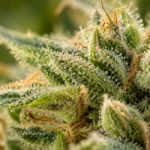
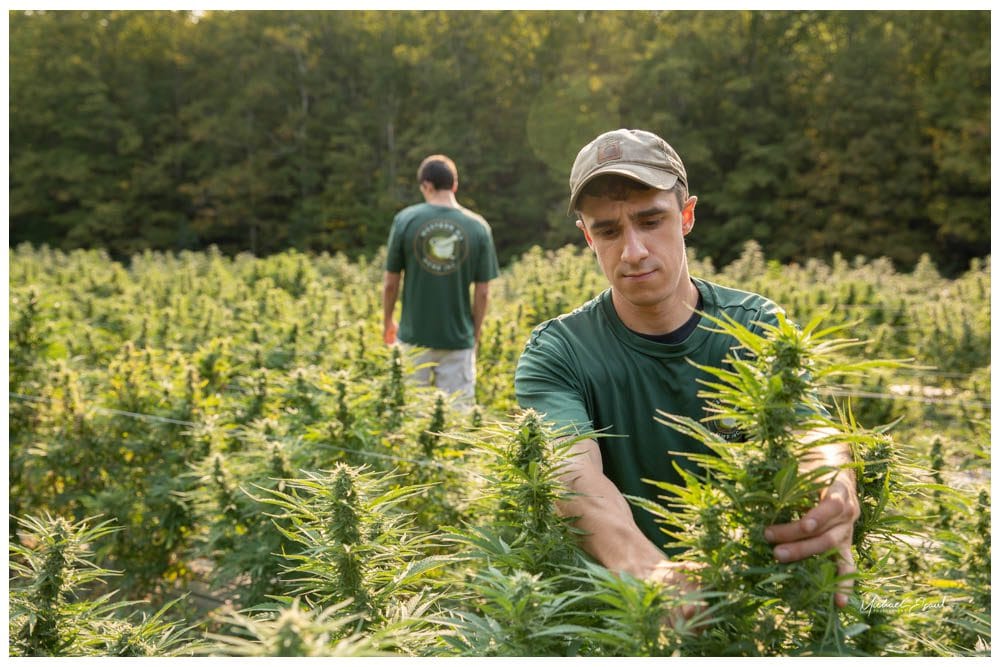
As the flower matures, the resin glands—also called trichomes—change in appearance and composition. Young trichome heads tend to look clearer. As they mature, they become more developed and often appear cloudy or opaque. Some eventually begin turning amber as the flower moves beyond peak maturity.
We never judge a crop by trichome color alone. We look at the complete plant:
- The development and density of the flowers
- Swelling around the bracts
- Changes in pistil color
- Trichome maturity and resin coverage
- The strength and character of the aroma
- Cannabinoid and terpene development
- The overall health of the plant
Each sign adds another piece to the picture. The goal is not simply to produce the largest CBD number. It is to harvest a mature, aromatic flower with the complete chemistry and strain character we planted it to produce.
Terpene development matters just as much as cannabinoids
Terpenes give each hemp variety its distinct aroma and help shape the experience it delivers. A citrus-forward flower, a funky berry variety, and an earthy Kush are not interchangeable just because they contain similar amounts of CBD.
Those aromatic compounds develop and shift as the flower matures. They are also delicate. Leaving a mature crop exposed to repeated storms, saturated air, and plant stress can cost more terpene quality than a few additional days of field time can add.
Harvest timing is therefore not only about cannabinoid maturity. It is also about capturing the natural terpene profile while it is still fresh, expressive, and true to the strain.
Later Is Not Always Better
It is easy to assume that every additional day in the field makes hemp stronger or more complete. Plants do not work that way.
The final stretch of flowering can be valuable, but maturity eventually becomes over-maturity. Cannabinoid and terpene levels do not all peak at the same moment, and different varieties follow different patterns. Once a flower reaches its best balance, more time can mean fading aroma, aging resin, damaged flowers, or a crop that no longer meets the legal definition of hemp.
The goal is not to harvest on the last possible day. It is to harvest at the right moment.
Massachusetts Weather Creates a Narrow Finish Line
Growing hemp outdoors in Western Massachusetts means working with a shorter and less predictable finish than growers in warmer climates.
Most full-term hemp varieties begin flowering as the days shorten. By the time the flowers are putting on their final weight and resin, the growing season is already moving toward colder nights, heavy dew, frost, and fall rain.
Late-season weather can change quickly:
- A warm, dry week can become several days of cold rain
- Heavy morning dew can keep dense flowers wet long after sunrise
- Early frost can damage exposed plant tissue
- Shorter days reduce the time plants have to dry between wet periods
- Wind and storms can break branches carrying mature flowers
This is one reason genetics matter so much on a Massachusetts hemp farm. A variety must do more than produce impressive flower under perfect conditions. It must begin flowering early enough and finish reliably in our climate.
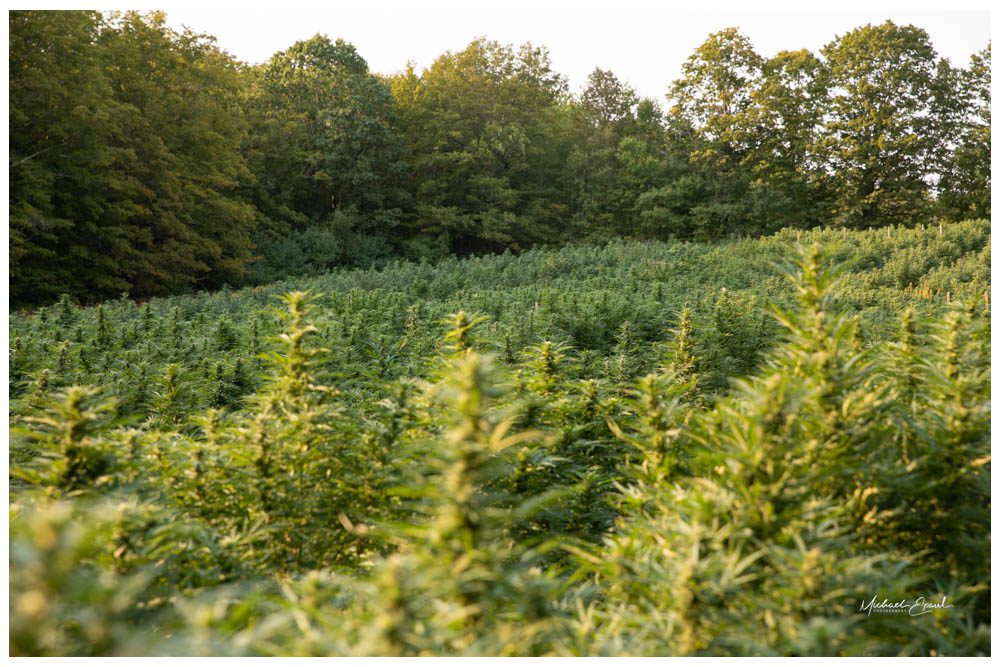
You can see how the growing season develops in our look inside the Massachusetts hemp fields in August.
Harvesting Hemp Early Can Prevent Mold Loss
Fall moisture creates one of the hardest harvest decisions a farmer has to make.
Dense hemp flowers can trap moisture deep inside the bud. During cool, wet weather, that creates the conditions in which gray mold and other fungal problems can spread. The outside of a flower may still look healthy while damage is beginning closer to the stem.
If a long wet stretch is approaching, taking the crop a little earlier can be the best way to protect it. That does not mean harvesting an immature plant. It means accepting slightly less field time rather than gambling a clean crop for a few final days of development.
A clean, aromatic flower harvested slightly ahead of schedule is far more valuable than an overripe flower compromised by mold. Once mold enters the flower, no extraction or refinement can restore what was lost.
Knowing when to stop waiting is part of knowing how to grow.
How THC Testing Affects Hemp Harvest Timing
Weather and plant maturity are not the only factors. Hemp farmers must also time harvest around THC compliance testing.
Hemp plants do not recognize the legal line between hemp and marijuana. Cannabinoid-rich varieties continue developing their chemistry as the flowers mature. As desirable cannabinoids rise, total THC can rise as well. A compliant hemp variety can eventually exceed the legal limit if it remains in the field too long.
Massachusetts tests hemp crops before harvest to confirm that they meet the acceptable hemp THC level centered on 0.3% total THC. Total THC includes measured delta-9 THC plus the potential THC represented by THCA. It is not based only on the small amount of active delta-9 THC present in raw flower.
Under the current Massachusetts Hemp Program harvest requirements:
- A harvest report must be submitted at least 21 days before harvest begins
- The crop cannot be harvested until the state sample has been collected
- Each lot is sampled separately
- The entire sampled crop must be harvested within 30 days after sampling
That creates a real balancing act. We must schedule sampling while the crop is compliant, then allow the flowers to continue developing within the 30-day harvest window without losing them to weather or letting the timing get away from us.
Timing the Test Without Stopping the Plant
The compliance sample captures the crop at one moment, but the plants remain alive and continue changing afterward.
Our job is to anticipate what each variety will do next. Sampling too late can put a cannabinoid-rich crop at risk of exceeding the THC limit. Sampling too early can start the 30-day clock before the flowers are close enough to maturity.
The process requires planning:
- Track flowering and cannabinoid development by variety.
- Submit the state harvest report far enough ahead of the intended harvest.
- Schedule sampling while the lot remains compliant.
- Do not begin harvesting until the official sample has been collected.
- Use the remaining window to let the flower finish while watching weather, resin maturity, and plant health.
- Complete the harvest within 30 days of sampling and keep each lot properly separated.
This is not a loophole or a shortcut. It is how a living crop is managed under a fixed legal standard.
Different Hemp Varieties Finish at Different Times
One reason we grow and extract our hemp in separate, strain-specific batches is that different varieties do not mature on one universal schedule.
Genetics influence when a plant begins flowering, how quickly its flowers build, which terpenes it produces, and when its cannabinoid profile reaches the balance we want. One variety may be ready while another still needs another week.
Harvesting every field and variety on the same day may be convenient, but convenience is not the same as quality. We would rather make several deliberate harvest decisions than force every plant into one schedule.
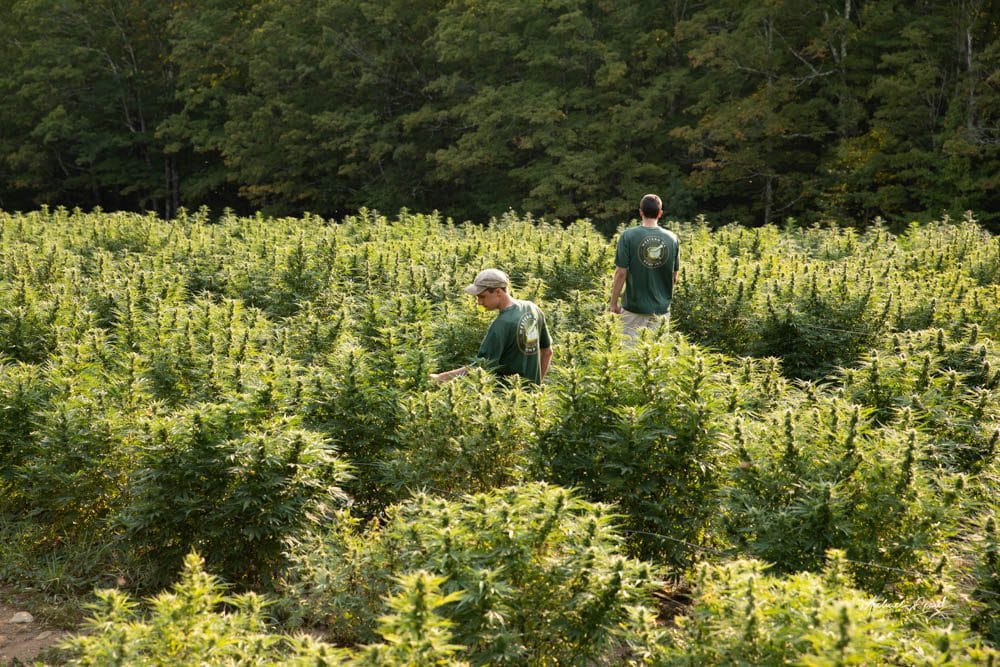
That same separation continues after harvest. We extract each hemp variety separately so the chemistry we protected in the field remains present in the finished extract.
How We Decide When to Harvest Hemp
There is no single signal that makes the decision for us. We combine what the plant is showing us with what is happening around it.
Before harvesting a lot, we consider:
- Resin and trichome maturity
- Cannabinoid development
- Terpene intensity and aroma
- Flower density and physical condition
- Signs of disease or moisture stress
- The extended weather forecast
- Frost and heavy-rain risk
- The date of the compliance sample
- The remaining days in the legal harvest window
- The drying space available for that crop
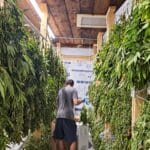
Drying capacity matters because quality can still be lost after the plant is cut. Harvesting more flower than can be dried with proper airflow and humidity control simply moves the mold risk indoors.
We harvest by hand and in manageable batches so the crop can move from the field into the drying environment without becoming a pile of wet plant material waiting for space.
The Right Hemp Harvest Time Protects the Whole Plant
A full-spectrum extract can only preserve the compounds that are present in the flower at harvest.
If the flower is cut before its chemistry develops, refinement cannot create the missing plant compounds. If the crop is left through damaging weather, processing cannot bring back lost terpenes or clean up mold-damaged flower. Quality must be protected before extraction begins.
That is why harvest timing is part of our True to the Plant philosophy. We choose genetics for our region, follow each variety through flowering, harvest when the plant and conditions align, and use gentle extraction to preserve what the crop produced.
Learn more about how we grow hemp in Western Massachusetts or read why the hemp plant is greater than CBD alone.
Come See the Farm
The best way to understand harvest timing is to stand beside the plants and see how much can change from one week to the next.
Our farm tours give visitors a closer look at how we select varieties, monitor flower development, protect the crop, and turn field-grown hemp into finished products.
Sign up for a Western MA Hemp farm tour and see where True to the Plant begins.
Hemp Harvest Timing FAQs
When is hemp ready to harvest?
Hemp is ready when the flowers, resin glands, cannabinoids, and terpene profile have reached the desired maturity and the crop can be harvested safely within its legal compliance window. Growers also have to account for weather, plant health, and drying capacity.
How can you tell whether hemp flower is mature?
We look at resin coverage, trichome development, flower density, swollen bracts, changing pistil color, aroma, cannabinoid development, and the overall condition of the plant. No single visual cue tells the whole story.
What color are trichomes when hemp is ready to harvest?
Young trichomes tend to look clear. As the resin glands mature, many become cloudy or opaque, while some may begin turning amber as the flower moves beyond peak maturity. Trichome color is useful, but it must be considered alongside flower development, aroma, plant health, weather, and compliance timing.
Why would a farmer harvest hemp early?
An earlier harvest may be necessary when extended rain, heavy dew, frost, disease, or mold pressure threatens the crop. Protecting clean flower is more important than leaving it in the field for a few additional days.
Does every hemp strain finish at the same time?
No. Flowering date, maturation speed, cannabinoid development, and terpene production are strongly influenced by genetics. Each variety needs to be monitored and harvested on its own schedule.
How does Massachusetts test hemp before harvest?
Massachusetts collects a representative sample from each reported lot and tests it for total THC. The sample must be collected before harvest begins, and the sampled crop must be completely harvested within 30 days.
Why can a hemp crop go over 0.3% THC?
The plant continues producing and changing cannabinoids as the flowers mature. The legal definition of hemp sets a fixed THC limit, but plant chemistry does not stop developing at that line. Testing and harvest timing must therefore be planned together.