Should You Take CBD With Food?
Take your CBD oil or capsules with food—ideally a normal meal that includes healthy fats.
That’s the practical starting point whether you use hemp during the day or in the evening. Food can help your body absorb more of the CBD you swallow, and choosing nutritious sources of fat adds benefits beyond your hemp routine.
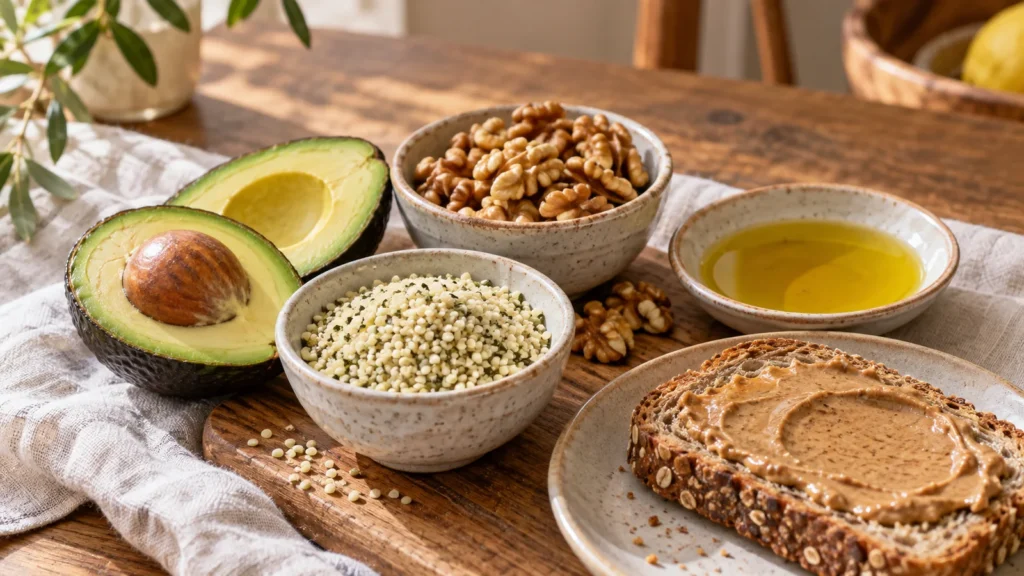
You don’t need a huge meal or a special diet. Breakfast with nut butter, lunch with avocado, or dinner with olive oil and salmon are straightforward ways to bring food and your hemp routine together.
What Should You Eat With CBD?
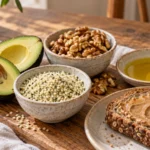
Build around foods you already enjoy, with an emphasis on unsaturated fats from plants and fish.
- Breakfast: Oatmeal topped with walnuts, ground flaxseed, or hemp hearts.
- A quick morning meal: Whole-grain toast with peanut butter, almond butter, or avocado.
- Lunch: A salad or grain bowl with olive oil dressing, avocado, and seeds.
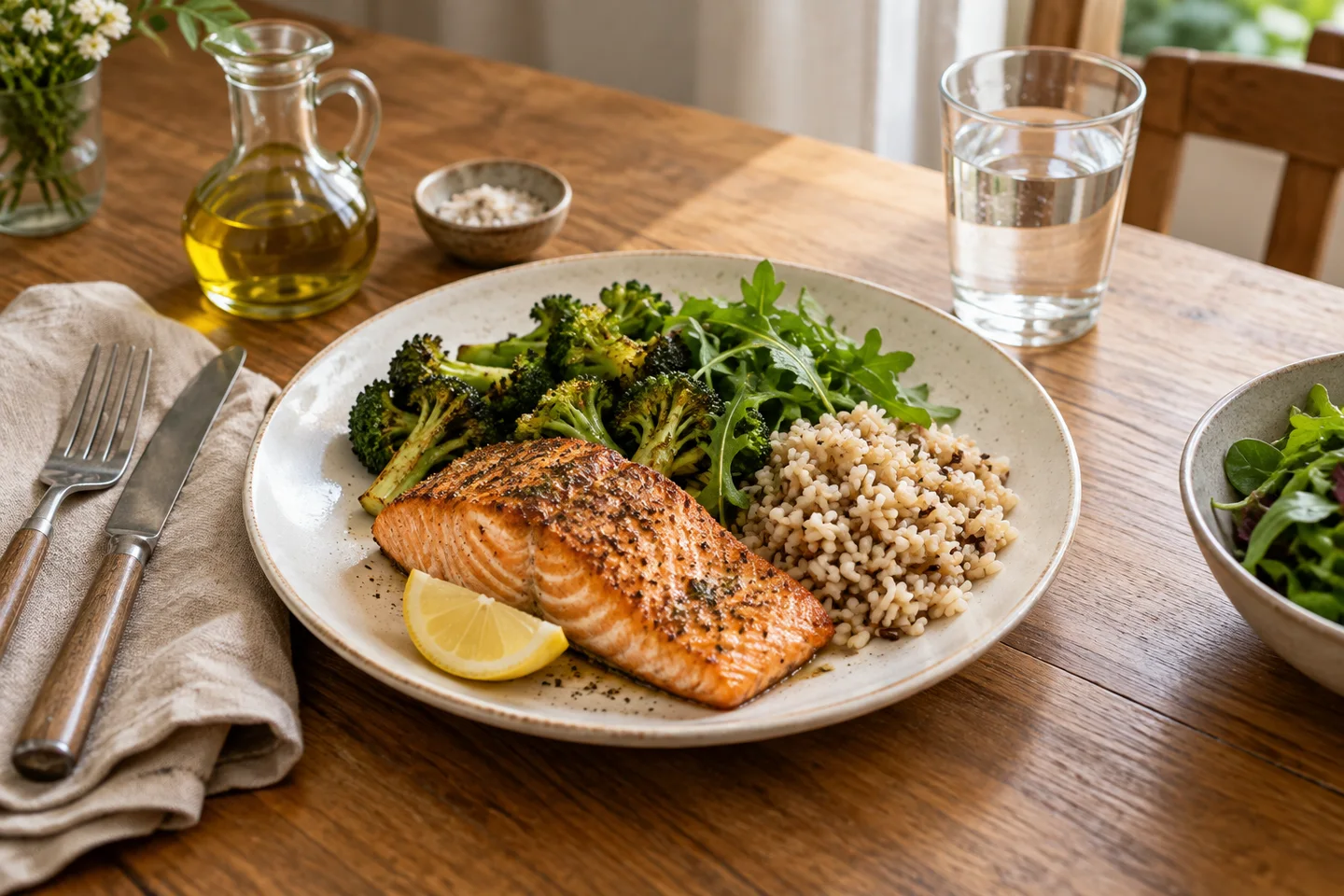
- Dinner: Salmon with vegetables, or a bean-and-vegetable meal prepared with olive oil.
- A small snack: A modest handful of nuts or whole-grain crackers with nut butter.
These foods provide useful fats alongside other nutrients. Choosing unsaturated fats in place of foods high in saturated fat is also a better everyday approach to heart health. Learn more about healthy-fat food choices.
For most readers, the simplest action is this: take your usual serving with a meal you already eat, and include a source of healthy fat.
Why Taking CBD With Food Helps Absorption
CBD is fat-soluble, meaning it dissolves readily in fats and oils rather than water. Food changes the digestive environment through which swallowed CBD passes.
Taking CBD with a meal, particularly one containing fat, can increase the amount that reaches your bloodstream compared with taking it after fasting. This food effect has been observed with CBD-rich hemp extract as well as purified CBD. Read more about food and CBD absorption.
If you’ve been taking your product on an empty stomach, pairing it with a regular meal is a useful step to consider before increasing your serving. Keep the amount the same while making that change. You’re changing how you take the serving, so don’t increase it at the same time.
Omega-3 and Omega-6: Healthy Fats Beyond Your CBD Routine
Healthy fats do more than accompany a hemp product. Some provide essential fatty acids your body needs for normal function.
Two important examples are alpha-linolenic acid, an omega-3, and linoleic acid, an omega-6. Your body cannot make these essential fats, so they must come from your diet. They contribute to cell membranes and are starting materials for other fatty acids and signaling compounds. Learn about essential omega fatty acids.
- Walnuts, chia seeds, and ground flaxseed: Sources of the plant-based omega-3 ALA.
- Hemp hearts and hemp seed oil: Sources of both omega-6 linoleic acid and omega-3 ALA.
- Salmon: A source of the longer-chain omega-3s EPA and DHA.
- Olive oil and avocado: Useful sources of primarily monounsaturated fats, adding variety to your healthy-fat choices.
Both omega-3s and omega-6s belong in the conversation. The goal is a varied diet that supplies essential fats, including regular sources of omega-3s. Add hemp hearts to oatmeal, use olive oil on a salad, or make salmon part of your meal rotation. These are everyday food choices, not something you need to reserve for the moment you take CBD.
The Connection to Your Endocannabinoid System
Your body makes its own cannabinoid signaling molecules, called endocannabinoids, using fatty-acid building blocks.
For example, anandamide is derived from arachidonic acid, an omega-6 fatty acid. Omega-3 fatty acids also contribute to related signaling molecules within the broader endocannabinoid system. See more on anandamide’s fatty-acid origin and omega-3-derived signaling molecules.
This gives healthy fats a role beyond the immediate question of CBD absorption: they are part of the nutritional foundation your body uses for its own cellular communication. Include these foods regularly throughout the week.
How to Take CBD Oil and Capsules With Food
CBD Oil: Hold Under Your Tongue, Then Swallow
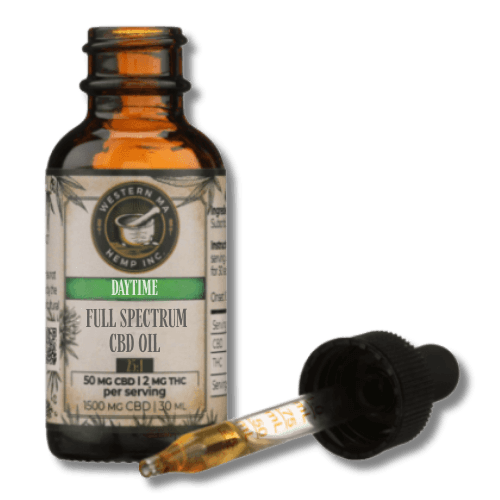
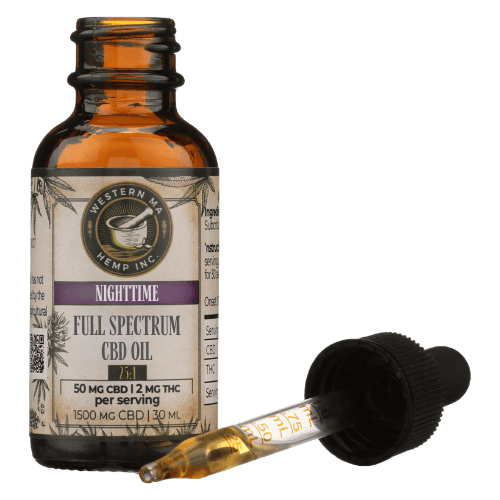
Place your measured serving of our CBD oil under your tongue and hold it there for 30–60 seconds before swallowing with water. These are the directions for our Daytime CBD Tincture and Nighttime CBD Sleep Tincture.
Pair the serving with your meal or snack. Holding oil under your tongue doesn’t make food irrelevant—the portion you swallow still enters the digestive tract. Research on CBD oil absorption helps explain why digestion remains relevant to tinctures.
Keep the meal and the tincture separate. There’s no need to pour your CBD oil into your food to take them together.
CBD Capsules: Take With Water and a Meal
Take the directed capsule serving with water alongside your meal.
Capsules are premeasured and tasteless, making them convenient at breakfast, lunch, or dinner. Because they are swallowed, digestion is central to how their contents are absorbed.
For more help choosing a format, read our CBD oil versus CBD capsules guide.
Nighttime Use: Choose a Small Healthy-Fat Snack
Our Nighttime CBD Sleep Tincture directions call for taking it 15–30 minutes before bed. Pair that serving with a small snack containing healthy fats, such as whole-grain crackers with nut butter. You don’t need a second dinner or an unusually heavy meal before bed.
Keep dietary restrictions or reflux concerns in mind, and follow individualized guidance from your clinician. For nighttime capsules, follow that product’s timing directions rather than automatically using the tincture’s schedule.
Why We Use Hemp Heart Oil
At Western MA Hemp, we use hemp heart oil to carry our hemp extract.
Hemp heart oil is pressed from the hulled inner portion of the hemp seed. It has a golden color and mild, nutty taste, and keeps the carrier connected to the same plant as the extract.
Hemp seed oil naturally contains both omega-6 linoleic acid and omega-3 alpha-linolenic acid. These are major components of its fatty-acid profile.
The carrier serves a purpose in the formula, while your meals supply the larger nutritional foundation. Continue getting healthy fats from everyday foods rather than treating a small serving of tincture as your daily omega intake.
Read more about this ingredient choice in Why We Use Hemp Heart Oil in All Our Products.
Your Simple CBD-and-Food Routine
- Pick your meal or snack. Match it to your product’s timing directions.
- Include a nutritious fat. Choose nuts, seeds, avocado, olive oil, or salmon.
- Take your measured serving. Hold our oils under your tongue for 30–60 seconds; swallow capsules with water.
- Don’t increase the serving when switching from an empty stomach to food. Food can increase CBD exposure.
If you take prescription medications, check with a pharmacist or clinician about interactions before changing your CBD routine. CBD administration and interaction information explains why food and other medicines deserve attention.
The takeaway: take your CBD with food, choose nutritious fats, and keep the serving deliberate.
Frequently Asked Questions
Is taking CBD on an empty stomach a waste?
No. CBD can still be absorbed without food. Taking it with a meal is a practical way to support absorption, particularly if you’ve been using it after fasting.
Are healthy fats better than eating a greasy meal?
They’re the better everyday nutritional choice. Nuts, seeds, avocado, olive oil, and salmon provide useful fats and other nutrients. You don’t need fried food or a large, heavy meal to pair food with CBD.
Should I take an omega supplement with my CBD?
You don’t need to add an omega supplement simply to take CBD. Start with food sources. Whether you need a separate supplement depends on your diet and individual health needs.
Does taking CBD with food make it work immediately?
No. Food can increase absorption, but it does not guarantee faster onset. Follow the product’s directions and avoid taking another serving too soon.
Do I need to eat every time I apply CBD lotion?
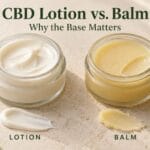
No. This food guidance concerns oils, capsules, and other products you swallow. Applying lotion to your skin does not depend on a meal.