Converted Cannabinoids
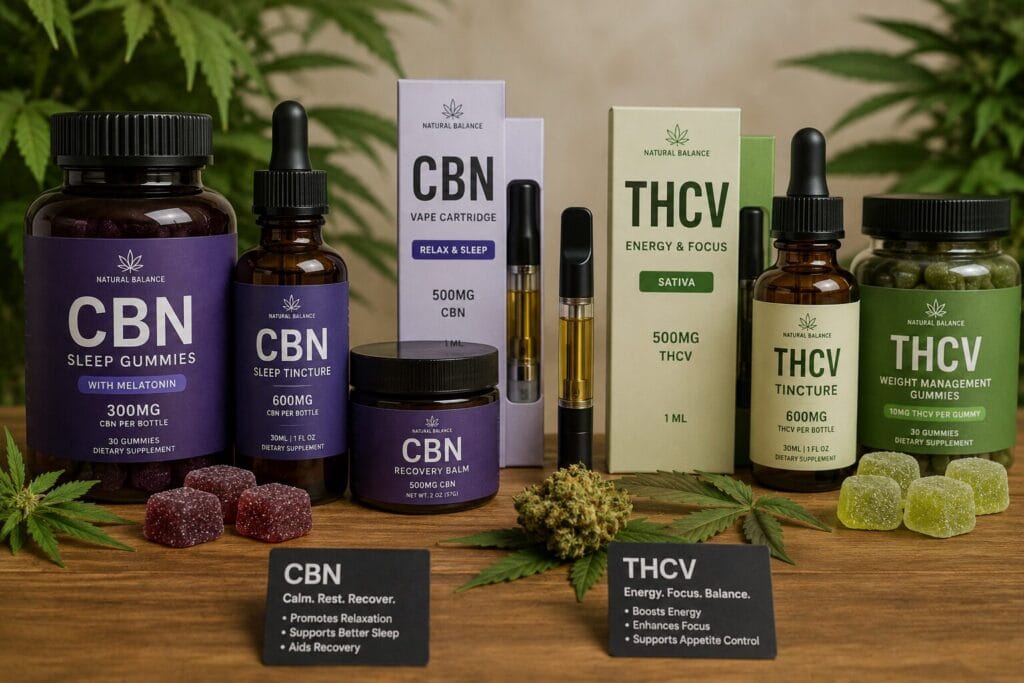
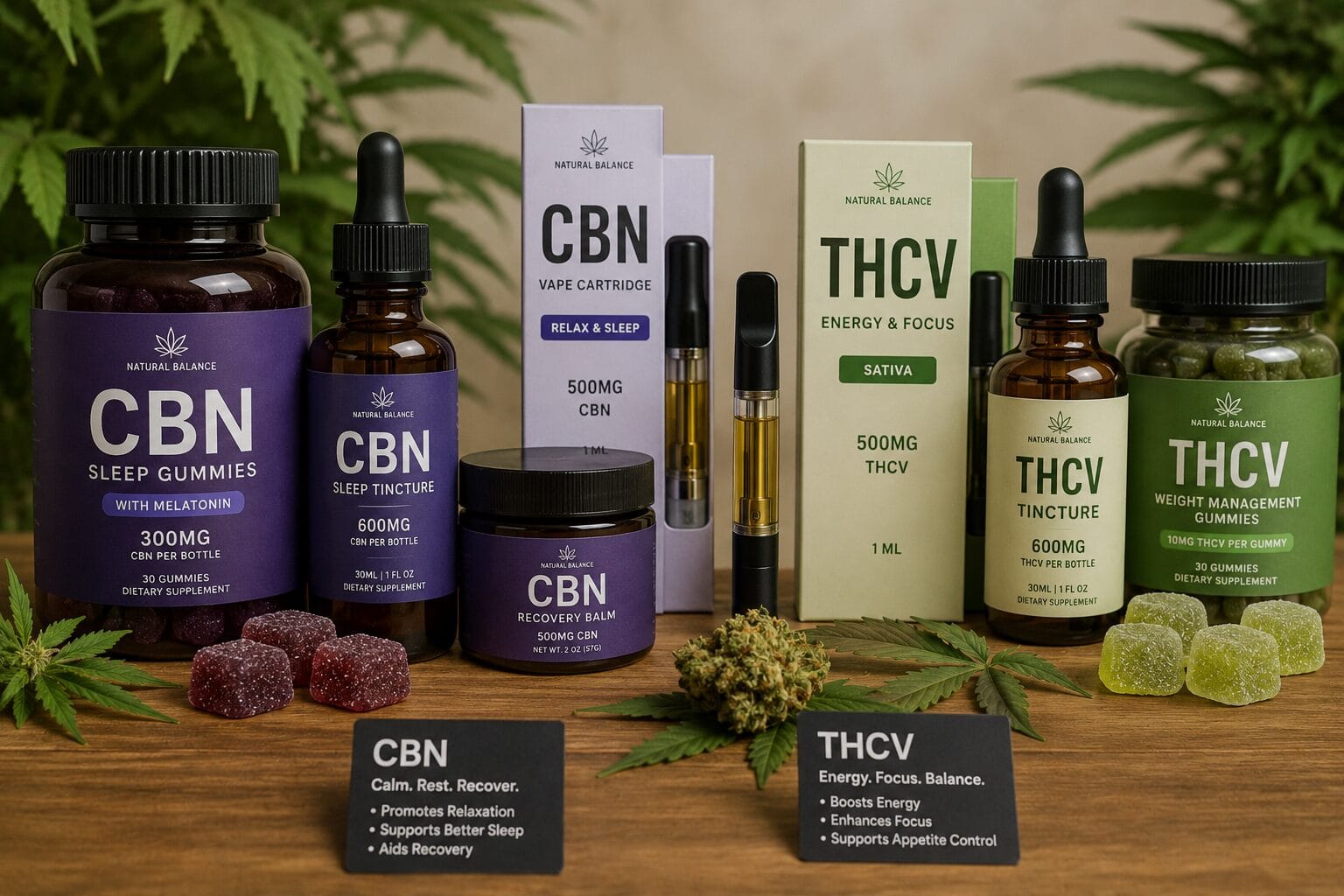
The hemp market has moved far beyond basic CBD oil. Today, shoppers see products featuring THC, CBN, CBG, THCV, and other minor cannabinoids. Many of these compounds do occur in cannabis plants, but that does not always mean the ingredient in a finished hemp product was simply extracted from the plant.
That distinction matters.
A cannabinoid can be naturally occurring and still be commercially produced through chemical conversion because the plant does not make enough of it at scale. This is where consumer confusion starts. A label may say “hemp-derived,” but that often means the starting material came from hemp, not necessarily that the final cannabinoid was directly extracted in meaningful amounts from hemp flower.
What Are Converted Cannabinoids?
Converted cannabinoids are cannabinoids made by chemically transforming one cannabinoid into another. In the hemp industry, CBD is often the starting material because CBD-rich hemp can be grown and extracted at scale. Through controlled chemistry, CBD or related cannabinoids can be converted into other compounds, including certain THC isomers and rare cannabinoids.
This does not automatically mean every converted product is unsafe. It does mean the product needs stronger documentation. Conversion chemistry can leave behind residual solvents, acids, catalysts, reaction byproducts, or unknown compounds if the ingredient is not properly purified and tested. The FDA has specifically raised this concern for delta-8 THC products, noting that delta-8 occurs naturally in hemp only at very low levels and that manufacturers often use chemicals to convert CBD into delta-8 THC.
The practical rule: the rarer the cannabinoid is in hemp, the more closely you should examine how it was made.
CBD: The Baseline Natural Hemp Cannabinoid
CBD is the most straightforward cannabinoid on this list. It is naturally produced by CBD-dominant hemp plants and is commonly extracted directly from hemp biomass. CBD is not impairing in the way THC is, although CBD products are not risk-free and can still interact with medications or contain other ingredients if poorly manufactured. The CDC notes that CBD is found in cannabis, does not cause a “high,” and may be derived from hemp, which is defined as cannabis containing no more than 0.3% THC.
For consumers, CBD is generally not the cannabinoid to worry about from a conversion standpoint. The bigger questions are whether the CBD product is accurately labeled, third-party tested, and clearly identified as full-spectrum, broad-spectrum, or isolate.
A full-spectrum CBD extract usually includes small amounts of naturally occurring THC because THC is present in CBD hemp at low levels. In CBD-dominant hemp, CBD and THC often rise together during flower development. NC State Extension describes CBD:THC ratios in hemp as often close to 20:1, with variation by genetics and harvest timing. In practical industry language, this is why people often refer to hemp as having roughly a 20:1 to 25:1 CBD:THC relationship.
Bottom line on CBD: Naturally produced and commonly naturally extracted. Still require a current COA, but CBD itself is usually not a converted cannabinoid.
THC: Natural in Full-Spectrum CBD, Often Converted in “Hemp-Derived THC” Products
THC is naturally produced by cannabis, including CBD-dominant hemp, but hemp produces it only in small amounts if it is compliant with federal hemp definitions. USDA describes hemp as Cannabis sativa L. and its derivatives, extracts, cannabinoids, isomers, acids, salts, and salts of isomers with no more than 0.3% THC concentration.
That means the small amount of THC in a true full-spectrum CBD product is generally coming along naturally with the hemp extract.
The situation changes when a product is marketed primarily as “hemp-derived THC,” especially delta-8 THC, delta-10 THC, or other THC isomers. Those products are often not made by simply extracting naturally abundant THC from hemp. Instead, they commonly start with hemp-derived CBD and use chemical conversion to create the target THC isomer. The FDA says delta-8 THC products may expose consumers to much higher levels than are naturally found in hemp raw extracts and that additional chemicals are used to convert cannabinoids like CBD into delta-8 THC.
Colorado regulators have made a similar distinction in the compliance context, noting concerns around chemically modifying or converting industrial hemp cannabinoids such as CBD isolate into delta-8, delta-9, delta-10 THC, or other THC isomers or functional analogs.
Bottom line on THC: Trace THC in full-spectrum CBD is usually naturally extracted. Products built around “hemp-derived THC” deserve closer scrutiny because many are made through conversion chemistry.
CBN: Naturally Occurring, But Usually Not Naturally Extracted at Scale
CBN is a good example of why “naturally occurring” can be misleading.
CBN does occur in cannabis, but it is typically found in small amounts. It is best understood as a degradation product of THC. As THC ages or is exposed to heat, oxygen, and light, some of it can transform into CBN. Research on cannabinoid degradation has observed THC degradation producing CBN, and has also described CBD degradation pathways that can involve THC intermediates and CBN formation under certain conditions.
Because plants generally do not produce large quantities of CBN directly, most commercial CBN ingredients are not simply extracted from fresh hemp flower. The Montana Cannabis Control Division states that CBN does not occur in large percentages in cannabis biomass and that hemp-derived CBN distillate or isolate is typically chemically synthesized from CBD to be financially profitable.
This is why CBN should be on the “look closely” list. Many CBN products are marketed for sleep, but consumers should not assume the CBN was naturally extracted just because CBN can occur naturally in aged cannabis.
Bottom line on CBN: Naturally occurring in small amounts, commonly associated with THC degradation, but most hemp-derived CBN ingredients should be treated as converted unless the manufacturer proves otherwise.
CBG: Naturally Produced and Often Extracted from CBG-Dominant Hemp
CBG is different from CBN and THCV. It is not merely a trace degradation cannabinoid. CBG comes from CBGA, often described as a starter or precursor cannabinoid. In the plant, CBGA is converted through enzymatic pathways into CBDA, THCA, and other acidic cannabinoids. NC State Extension describes THCA and CBDA as being synthesized from CBGA, the acid form of CBG.
CBG-dominant hemp strains have been developed specifically to produce meaningful CBG levels. Cornell’s hemp program notes that while most hemp cultivars have low CBG concentrations, predominantly CBG cultivars have been developed. It also notes that CBG-dominant plants can have distinct cannabinoid profiles and that reliable cultivar sourcing is important.
CBD-dominant hemp can also contain small amounts of CBG because CBGA sits upstream in the cannabinoid pathway. However, if a product is high in CBG, that ingredient may have come from a CBG-dominant hemp cultivar rather than from conversion.
Bottom line on CBG: Usually a lower-risk cannabinoid from a conversion standpoint when sourced from CBG-dominant hemp. Still verify with testing and supplier documentation.
THCV: Rare in Hemp, More Associated with Certain Marijuana Genetics
THCV is where shoppers should be especially cautious.
THCV can occur naturally in cannabis, particularly in certain high-THC cannabis genetics. A 2024 review discussing South African cannabis varieties notes that Durban Poison has reported THCV levels around 0.2% to 1.8%, and Swazi Gold has been reported with THCV around 1% to 3%. These are marijuana-type, high-THC cannabis examples, not ordinary CBD hemp examples.
In hemp, THCV is generally not present at commercially useful levels. That creates a supply problem. When you see a hemp THCV gummy, tincture, or vape, the THCV is often produced through synthesis or conversion rather than simple hemp extraction. For example, BayMedica describes its THCV as produced through full synthesis and conversion pathways, including plant-extracted CBDV cyclized to THCV.
That does not automatically make a THCV product poor quality, but it does make documentation essential. The brand should be able to explain whether the THCV is naturally extracted, converted from CBDV, fully synthesized, or produced through another route.
Bottom line on THCV: Naturally found in some marijuana genetics, generally not abundant in hemp, and hemp THCV products should be assumed converted or synthesized unless clearly documented otherwise.
Which Cannabinoids Should You Look Out For?
The cannabinoids that deserve the most scrutiny are hemp-derived THC isomers, CBN, and THCV.
CBD and CBG are more commonly produced by natural plant extraction from hemp cultivars bred for those cannabinoids. THC can also be natural when it appears as the trace THC portion of a full-spectrum CBD extract. But when THC is marketed as the main hemp-derived active ingredient, or when rare cannabinoids like CBN and THCV are present at meaningful potencies, conversion chemistry is much more likely.
A good product should make that clear.
What to Check Before Buying
Look for more than a basic potency COA. A reliable cannabinoid product should provide a batch-specific certificate of analysis that covers cannabinoid potency, residual solvents, heavy metals, pesticides, microbials, and ideally unknown or conversion-related impurities. The CDC warns that products labeled as hemp or CBD may contain THC, pesticides, heavy metals, bacteria, or fungi, which is why testing matters.

Also ask for the source and manufacturing method of the active cannabinoid. A COA can confirm what cannabinoids are present, but it may not prove whether the ingredient was naturally extracted or chemically converted. Montana’s CBN guidance makes this point directly, stating that a manufacturer-supplied COA does not adequately demonstrate whether CBN is synthetic or non-synthetic because it does not show the manufacturing method.
Red flags include vague claims like “natural hemp THCV” with no sourcing explanation, “hemp THC” products with no residual-solvent testing, CBN products that do not disclose whether the CBN was converted from CBD, and QR codes that lead to outdated or non-batch-specific lab reports.
Final Takeaway
Not all hemp cannabinoids are created the same way.
- CBD is naturally produced and commonly extracted from hemp.
- CBG can be naturally extracted from CBG-dominant hemp strains.
- THC occurs naturally in small amounts in full-spectrum CBD extracts, but many hemp-derived THC products involve conversion chemistry.
- CBN occurs naturally as THC degrades, but most commercial hemp CBN is typically made by converting CBD.
- THCV can occur in certain marijuana genetics, but hemp THCV products are generally made through synthesis or conversion because hemp does not usually produce THCV at scale.
For consumers and retailers, the key question is not just “Is this cannabinoid found in cannabis?” The better question is: How was this specific ingredient made, purified, and tested?