Massachusetts-Grown Hemp: Why We Still Grow Here
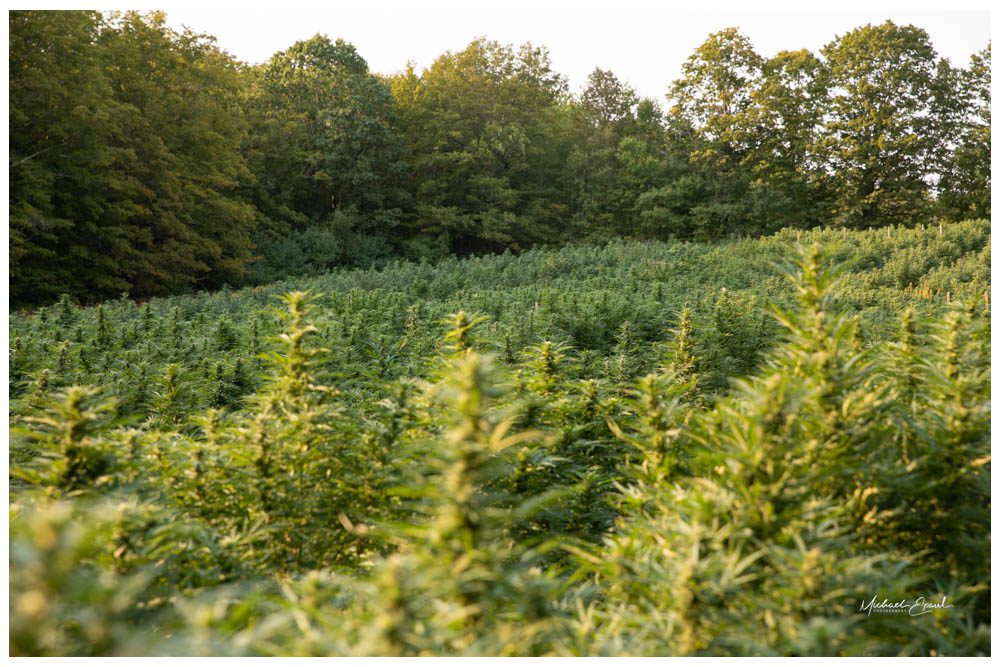
There was a moment when hemp felt like the next great Massachusetts crop.
In 2019, fields across the Commonwealth were being planted with optimism. Farmers, processors, and small businesses saw hemp as a new opportunity: a legal agricultural crop with real potential, a way to diversify land use, and a way to build something local in a market that was moving fast.
Massachusetts hemp production technically began in 2018, when the state issued 13 cultivation licenses. By 2019, that number had grown to nearly 70 cultivation licenses, and by 2020 MDAR licensed 69 hemp growers. The interest was real. The hope was real. The work was real.
But the market was too much for many of them.
A Lot of Farmers Planted Hemp. Not Enough Had a Market.
The early hemp years were difficult across the country. After the 2018 Farm Bill opened the door for legal hemp cultivation, thousands of farmers entered the space quickly. National hemp acreage jumped from 78,176 acres grown in 2018 to 201,126 acres in 2019. Many growers planted without firm contracts, and the result was oversupply, falling biomass prices, and a market that could not absorb what farmers had produced.
Massachusetts growers faced the same national pressure, but with additional local challenges. In 2019, Massachusetts policy limited the sale of several hemp-derived CBD products, including food products containing CBD, dietary supplement products, products making therapeutic or medicinal claims, and raw flower intended for consumer end use.
For many farmers, that changed the economics overnight.
A crop that looked promising on paper became hard to sell. Biomass sat in storage. Contracts disappeared. Prices dropped. Regulations shifted. Processing options were limited. Farmers who had done the hard work of growing hemp found themselves with a product and no clear, profitable path to market.
That is not a failure of those farmers. It is what happens when a young agricultural market grows faster than the infrastructure around it.
We Are Still Growing Massachusetts Hemp
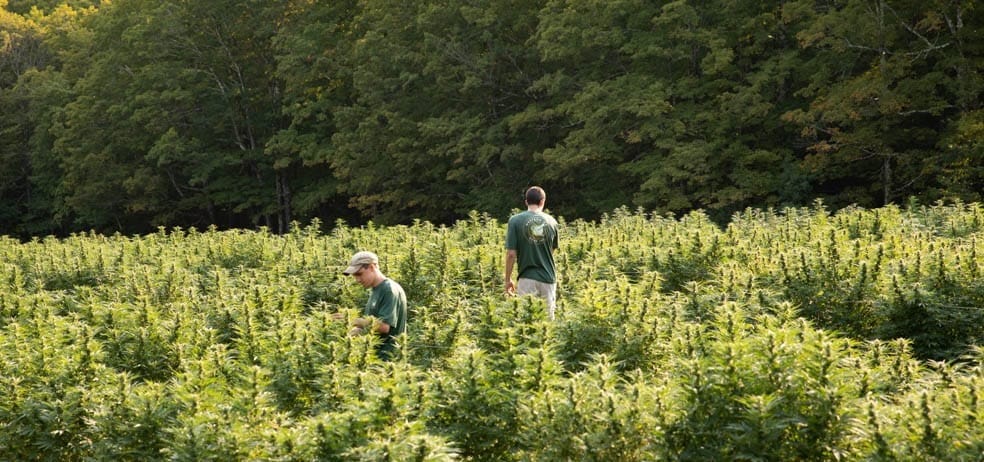
Today, the Massachusetts hemp landscape looks very different.
Public license data now shows only a small number of active Massachusetts hemp production-related licensees. A recent USDA hemp licensee file lists only a handful of active Massachusetts entries, including producer or dual-license operations, compared with the dozens of growers who entered the market during the early years.
USDA production data also shows how small Massachusetts hemp acreage has become. In the 2026 National Hemp Report, Massachusetts recorded 17 planted acres and 16 harvested acres in 2023, then 23 planted acres and 22 harvested acres in 2024. For 2025, Massachusetts figures were withheld to avoid disclosing data for individual operations, which usually happens when there are very few reporting producers.
That is why we do not take the phrase Massachusetts-grown hemp lightly.
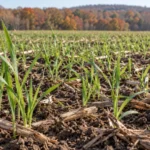
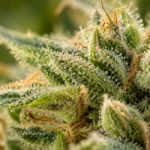
We are one of the few businesses still doing this here. We still put plants in Massachusetts soil. We still grow in this climate. We still work through the regulations, the testing, the weather, the labor, and the market pressure because we believe local hemp matters.
Why Massachusetts-Grown Hemp Matters
Hemp is not just an ingredient. It is an agricultural product.
Where it is grown matters. How it is grown matters. Who grew it matters. Whether it was tested matters. Whether the business can trace it back to a real field, a real batch, and a real harvest matters.
Massachusetts-grown hemp gives customers something that mass-market hemp often cannot: a shorter supply chain and a clearer story.
When hemp is grown locally, there is more accountability. Customers can ask where it came from. They can ask how it was harvested. They can ask whether the product was tested. They can ask whether the company understands the plant because they actually grow it.
That is different from buying anonymous hemp extract from a bulk supplier, putting it in a bottle, and calling it a brand.
Growing Hemp Here Is Not the Easy Route
Massachusetts is not the easiest place to grow hemp.
The season is shorter than in many warmer states. The weather can be unpredictable. Humidity can create pressure late in the season. Labor is expensive. Land is expensive. Compliance is strict. The market is competitive.
Massachusetts hemp producers also have to operate within a regulated program. Under the Massachusetts State Hemp Plan, regulatory hemp samples are collected before harvest, licensees may not collect their own regulatory THC samples, and every lot and growing location must be sampled and tested.
That creates more work. It also creates accountability.
For hemp to remain hemp, total THC matters. Massachusetts uses total THC when determining compliance, which includes both delta-9 THC and THCA, the acidic cannabinoid that can convert into THC. The state plan describes total THC as the potential THC calculated after decarboxylation or by using a conversion factor.
That level of oversight is part of what separates compliant hemp farming from hype.
The Market Chose Volume. We Chose Staying Power.
The hemp industry moved fast in the beginning. A lot of people chased volume. A lot of people chased trends. A lot of people believed that planting more acres would automatically mean more opportunity.
The market proved otherwise.
Hemp rewarded the businesses that could adapt, stay compliant, focus on quality, and build direct relationships with customers. It punished businesses that were forced to depend on unstable wholesale prices, unclear regulations, or buyers that disappeared after harvest.
We stayed because we believe hemp should be grown with patience, not speculation.
We are not trying to be the biggest hemp company. We are trying to be one of the most accountable.
Small-Batch Hemp Has a Different Standard
When a business grows its own hemp, it cannot hide behind vague sourcing language.
We know the work behind each harvest. We know the difference between a good season and a difficult one. We know what it means to wait on testing, watch the weather, protect the crop, and make decisions that affect the final product months before it reaches a customer.
That is why small-batch hemp matters.
It is not just a label. It is a different operating model.
Small-batch Massachusetts hemp means fewer shortcuts. It means closer attention to the plant. It means a direct connection between the farm and the finished product. It means the people selling the product understand what went into growing it.
Supporting Local Hemp Supports Local Agriculture
When customers choose Massachusetts-grown hemp, they are not just choosing a product. They are supporting a local agricultural category that nearly disappeared.
They are supporting the farmers and small businesses that survived the early crash, the oversupply, the pricing collapse, the regulatory uncertainty, and the flood of cheaper out-of-state material.
They are supporting a business that kept growing when many others had to stop.
That matters.
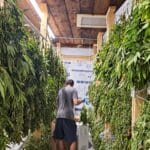
Because once local hemp farms disappear, they are not easy to bring back. The knowledge leaves. The infrastructure leaves. The genetics, the drying space, the compliance experience, the soil knowledge, and the grower relationships all become harder to rebuild.
Massachusetts Hemp Still Has a Future
The future of Massachusetts hemp will not look like the hype of 2019.
It will be smaller. More disciplined. More transparent. More quality-driven. Less about chasing trends and more about building trust.
That is the kind of hemp industry we believe in.
Massachusetts-grown hemp should mean something. It should mean the product came from a real place, grown by people who care about the crop, tested for compliance, and handled with respect from seed to finished product.
We are still here because we believe that standard is worth protecting.
We are still growing Massachusetts hemp because local agriculture matters.
And we are still growing because the people who care about where their hemp comes from deserve a better answer than "somewhere."