How to Identify a Good Full-Spectrum CBD Oil

The words “full spectrum” appear on a lot of CBD oil labels, but the label alone does not tell you how much of the hemp plant is actually still in the bottle.
A good full-spectrum CBD oil should carry more than CBD. It should preserve a broad range of the cannabinoids, terpenes, flavonoids, and natural oils that the hemp flower developed while it was growing. You can begin evaluating that oil before you ever take a serving by looking at its color, tasting the plant, reading its ingredients, and checking its lab report.
No single clue proves that an oil is high quality. A balanced gold-amber color means more when it is supported by a natural hemp taste, a short ingredient list, multiple plant compounds on the lab test, and a complete safety profile.
Here is what to look for.
What “Full Spectrum” Should Actually Mean
Full-spectrum CBD oil begins with hemp extract that retains a range of the plant’s naturally occurring compounds. CBD may be the most abundant cannabinoid, but it should not be the only one.
The oil may also contain naturally occurring minor cannabinoids such as CBG, CBC, CBDV, CBDA, and trace amounts of THC, along with terpenes and other components of the flower. The exact profile will vary with the hemp variety, harvest, and extraction, but the central idea remains the same: full spectrum should represent the plant’s chemistry as a whole.
This is different from CBD isolate, which separates CBD from the rest of the plant, and highly refined distillate, which can narrow the original profile considerably. All three can contain CBD, but they are not the same kind of hemp product.
Our Going Beyond Full Spectrum article explains why the words on the label matter less than how much natural plant chemistry was preserved.
Look for a Natural Gold-Amber Color
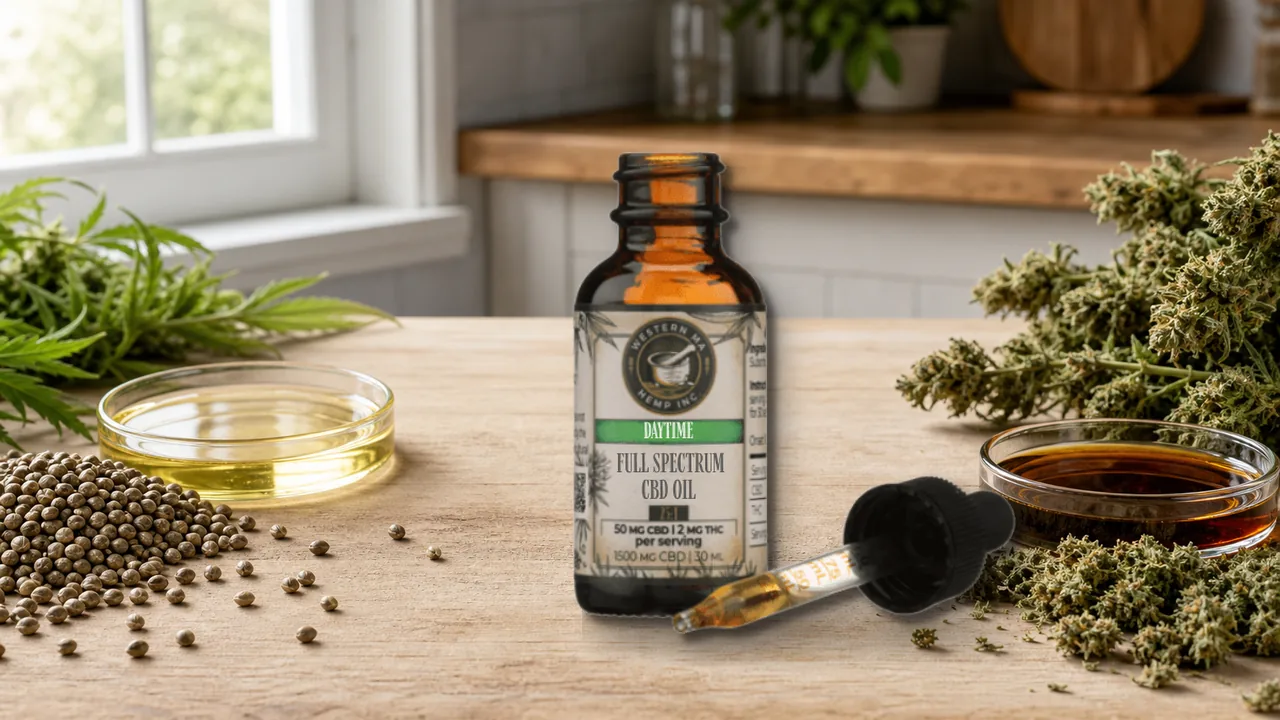
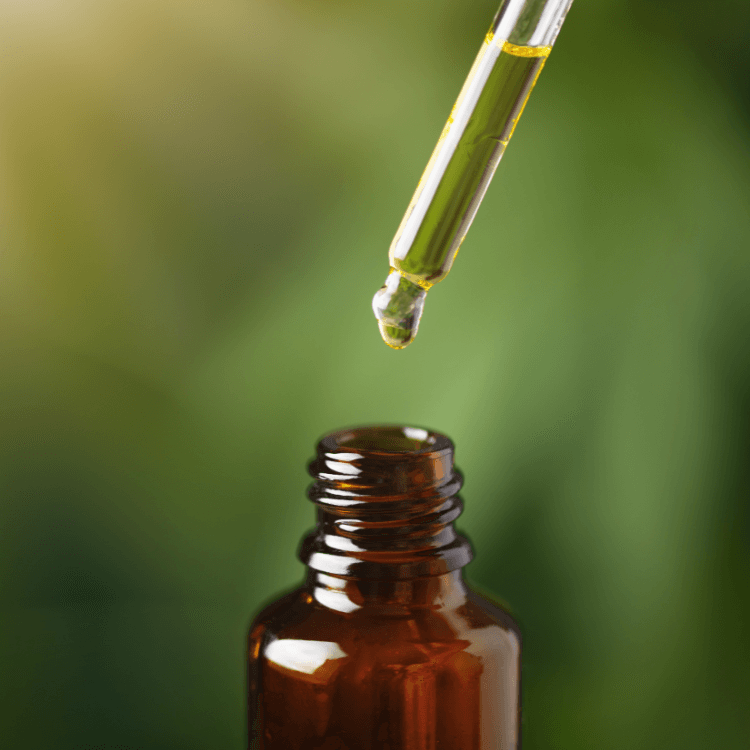
A well-made full-spectrum CBD oil should generally have a gold-to-amber color. It may be slightly lighter or deeper depending on the hemp variety, harvest, extraction, concentration, and carrier oil, but it should look like a clean botanical oil rather than water or dark sludge.
That gold-amber appearance reflects a balance. The extract has been cleaned enough to remove unnecessary plant material while retaining the compounds that give the hemp flower its character.
Natural variation is expected. Hemp is an agricultural plant, not a synthetic ingredient made to look identical forever. Two harvests can produce oils with slightly different shades while still sharing the same overall standard of quality.
Why Lighter Does Not Always Mean Better
Clear or very pale oil can look exceptionally pure. In hemp, however, a highly refined appearance can also mean that much of the plant’s original chemistry has been removed.
CBD isolate is typically white or nearly colorless before it is blended into a carrier oil. Highly refined distillate can also produce a clear-to-light-gold finished product. These ingredients may provide a concentrated amount of CBD, but they often contain far fewer minor cannabinoids, terpenes, flavonoids, and natural oils than a less heavily refined full-spectrum extract.
Refining an extract further can make it look cleaner while making its plant profile simpler. That is why the palest bottle is not automatically the best bottle. Visual clarity and whole-plant richness are not the same thing.
Why Darker Does Not Automatically Mean Full Spectrum
The opposite assumption can also be misleading. A very dark CBD oil is not necessarily more complete, more concentrated, or more full spectrum.
Excessively dark oil can mean that additional chlorophyll, waxes, and other plant material were pulled into the extract. Chlorophyll is a normal part of a living hemp plant, but extracting more of it does not automatically create a better finished oil. It can contribute a darker green-brown color and a bitter, grassy, or harsh taste.
A dark color may also come from the concentration of the extract, the carrier oil, age, storage, or the way the material was processed. Color alone cannot verify what is in the bottle.
The goal is not to make the lightest possible oil or the darkest possible oil. The goal is to preserve the useful chemistry of the flower while leaving behind unnecessary plant material. A clean gold-amber tone is often the visible result of that balance.
A Good CBD Oil Should Taste Like Hemp
Full-spectrum CBD oil should taste like the plant it came from.
The exact flavor will depend on the hemp variety and its natural profile. You may notice earthy, herbal, nutty, grassy, peppery, pine-like, or lightly floral notes. The flavor should be recognizably botanical because the oil still contains compounds produced by the hemp flower.
That natural taste is part of the product. It tells you something about what was preserved through extraction and formulation.
CBD isolate has very little flavor of its own because most of the plant has been removed. Highly refined distillate can also taste comparatively neutral. At the other end of the range, an overly dark extract can taste aggressively bitter, burnt, grassy, or harsh because it carries too much chlorophyll or unwanted plant material.
A good full-spectrum oil should have genuine hemp character without tasting like the entire green plant was crushed into the bottle.
Why a Full-Spectrum CBD Oil Should Not Need Flavoring
Added flavoring makes it harder to evaluate the extract itself.
Mint, berry, vanilla, and other flavors may make an oil taste more familiar, but they can also cover the natural flavor of the hemp. If an extract is nearly tasteless because it was heavily refined, added flavoring creates a sensory profile that did not come from the plant. If an extract is harsh or bitter, flavoring can be used to hide that too.
A good full-spectrum CBD oil should be comfortable standing on its own. Its taste should come from the hemp variety, the natural compounds preserved in the extract, and the carrier oil—not an added flavor system.
When you want a product that is true to the plant, tasting the hemp is a good thing.
Read the Lab Test for Multiple Cannabinoids and Terpenes
Color and taste can provide useful clues, but the lab report shows what the oil contains.
Start with the cannabinoid profile. A full-spectrum result should show CBD along with multiple naturally occurring cannabinoids. The exact compounds and amounts will vary, but a report that lists CBD as the only detected cannabinoid does not show a complete full-spectrum profile.
Next, look for a terpene analysis. Terpenes contribute to the aroma and flavor of different hemp varieties and help show whether the oil retained more of the flower’s original character. A brand emphasizing whole-plant or terpene-rich hemp should be willing to show that profile.
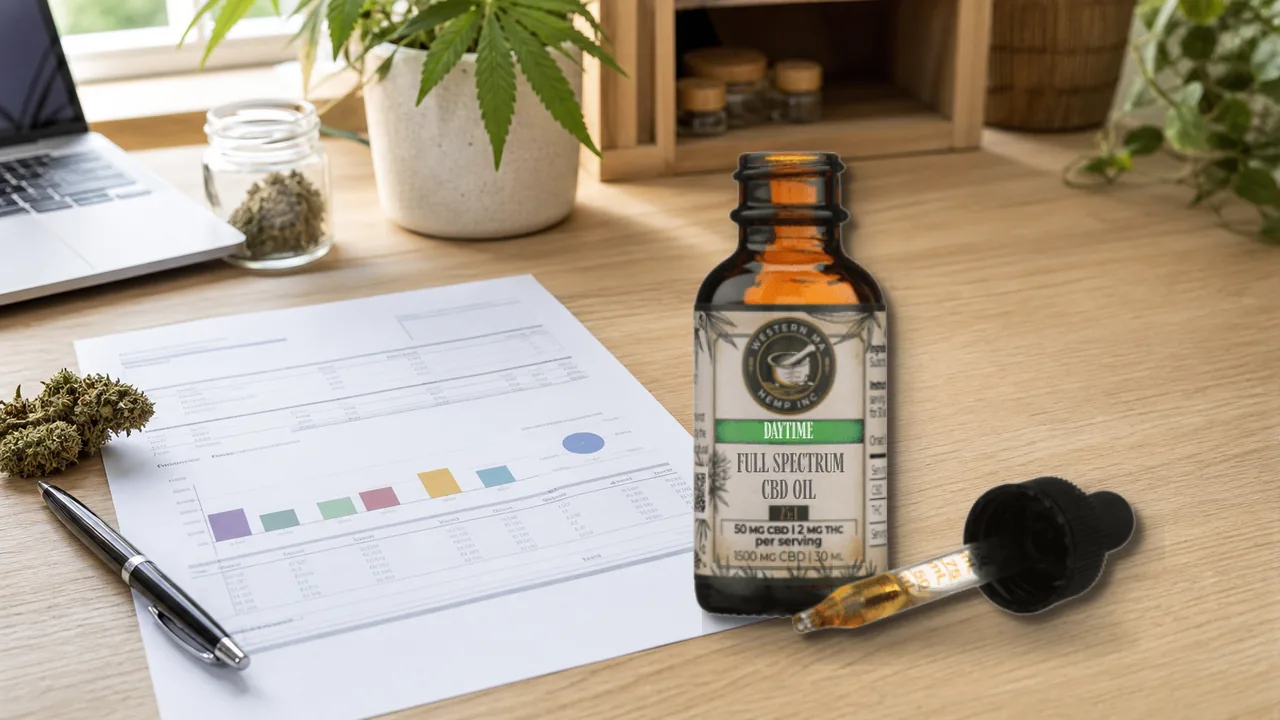
The report should match the product and batch you are holding. Look for the product name, batch or lot number, testing date, and the name of the independent laboratory. A generic report that cannot be connected to the bottle does not provide meaningful transparency.
If you want help reading each part, use our complete guide to reading a hemp product lab test.
The Lab Report Should Also Show a Safety Profile
A cannabinoid number does not tell you whether the product was screened for unwanted contaminants.
A complete safety profile should include testing appropriate to the product, such as:
- Pesticides
- Heavy metals
- Microbial contaminants
- Mycotoxins
- Residual solvents
The report should show clear results rather than simply saying “tested.” It should be easy to see which panels were performed and whether the product passed.
Full spectrum describes what a product is intended to retain. Safety testing helps show what should not be present. A trustworthy CBD oil needs both sides of that picture.
Keep the Ingredient List Short
A CBD tincture does not need a long formula.
At its simplest, it needs a quality hemp extract and a carrier oil. The carrier distributes the concentrated extract, creates a consistent serving, and makes the tincture easy to use.
Beyond that, every added ingredient deserves a reason. Flavorings, sweeteners, colors, preservatives, converted cannabinoids, and unrelated wellness ingredients do not make the hemp extract more full spectrum. They make it harder to see what the hemp itself is contributing.
The fewer additives in the bottle, the easier it is to evaluate the extract, understand what you are taking, and stay consistent.
Our tinctures contain just two ingredients: full-spectrum hemp extract and hemp heart oil. We use hemp to carry hemp because the finished oil should remain connected to the plant from beginning to end.
Look Beyond the Front of the Bottle
A polished label can call almost any CBD oil “premium” or “full spectrum.” The product itself should support those words.
Before choosing an oil, ask:
- Is the color naturally gold to amber rather than nearly colorless or excessively dark?
- Does it taste like hemp without being harsh or covered by flavoring?
- Does the lab report show multiple cannabinoids?
- Does the terpene profile reflect preserved plant chemistry?
- Does the report match the actual product batch?
- Was the oil screened for pesticides, heavy metals, microbes, mycotoxins, and residual solvents?
- Is the ingredient list short and easy to understand?
- Does the company explain where the hemp came from and how the extract was made?
These questions reveal far more than the size of the CBD number on the front label.
How We Make Our Full-Spectrum CBD Oil
At Western MA Hemp, a good tincture begins in the field. We select hemp varieties for their complete natural profiles, grow them on our Western Massachusetts farm, and make our products with the goal of preserving what those plants produced.
Our standard is not to isolate CBD from everything around it or rebuild an oil with unnecessary additives. It is to carry the hemp flower’s cannabinoids, terpenes, and natural oils into a clean, straightforward tincture.
That is why our Full Spectrum CBD Sleep Tincture contains only full-spectrum hemp extract and hemp heart oil. It has the natural gold-amber color and recognizable hemp taste that should be expected from a genuine plant-rich oil—with no added flavors to cover the extract.
You can also follow the process in our guide to how hemp extract is made.
The Best Full-Spectrum CBD Oil Still Resembles Hemp
A good full-spectrum CBD oil should not look, taste, or test like CBD separated from the plant.
Look for a balanced gold-amber color, a clean hemp taste, multiple cannabinoids and terpenes on the lab report, thorough safety screening, and a short ingredient list. Be cautious of oils that are nearly clear, excessively dark, heavily flavored, or supported by a lab report showing CBD alone.
The strongest sign of quality is consistency between everything you can see: the color, the taste, the ingredients, the lab results, the source of the hemp, and the way the company describes its process.
When all of those pieces point back to the plant, “full spectrum” means something.
Frequently Asked Questions
What color should full-spectrum CBD oil be?
A good full-spectrum CBD oil is generally gold to amber. The precise shade can vary with the hemp variety, harvest, concentration, extraction, and carrier oil. Extremely pale oil may be heavily refined, while very dark oil can contain excess chlorophyll or other plant material.
Is clear CBD oil better?
No. Clear or very light oil can be made with CBD isolate or highly refined distillate. It may contain CBD while carrying fewer of the minor cannabinoids, terpenes, flavonoids, and natural oils found in a complete hemp extract.
Should full-spectrum CBD oil taste like hemp?
Yes. Full-spectrum CBD oil should have a recognizable botanical flavor that may be earthy, herbal, nutty, grassy, peppery, or floral. An oil with almost no taste may be highly refined, while an excessively bitter or harsh taste can come from too much chlorophyll or unwanted plant material.
Should CBD oil contain flavoring?
A quality full-spectrum CBD oil should not need added flavoring. Flavoring can cover the natural taste of the hemp, hide a harsh extract, or give a nearly flavorless refined product an artificial identity.
How can I confirm that a CBD oil is full spectrum?
Check the batch-specific lab report. It should show CBD plus multiple naturally occurring cannabinoids, trace THC within the applicable limit, and preferably a terpene profile. The ingredient list, color, taste, hemp source, and safety testing should support the same whole-plant story.