Hemp Resin: Why the Sticky Part Matters
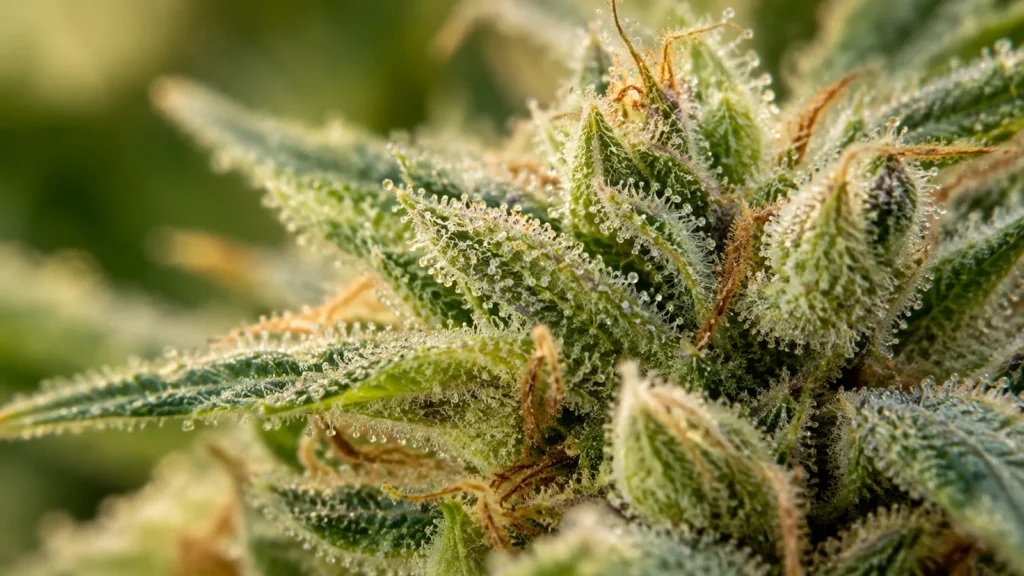
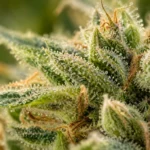
Illustration of the tiny resin glands that give hemp flower its frosty appearance.
If you’ve ever touched a hemp flower and noticed a sticky coating on your fingers, you’ve encountered its resin. That same material can collect on gloves and harvesting tools as the plants are handled.
For us, that stickiness represents much of what we work to grow and preserve. Hemp resin contains the cannabinoids and aromatic compounds that make the flower valuable—and it’s the starting point for our full-spectrum extracts.
What Is Hemp Resin, and Where Does It Form?
Hemp produces resin in tiny structures called glandular trichomes. These glands cover the flowers and some of the small leaves surrounding them, giving resin-rich hemp its frosty, sparkling appearance.
Under magnification, many look like miniature mushrooms: a slender stalk topped with a rounded head. Inside that head, the plant produces and stores a concentrated mixture of cannabinoids and terpenes. The trichome is the structure; resin is the material it holds. A closer look at hemp trichomes.
This explains why the flower matters so much. The large leaves may be hemp’s most recognizable feature, but the female flowers carry a particularly rich concentration of these resin-producing glands.
What Does Hemp Resin Contain?
Resin contains a mixture of plant compounds, rather than a single ingredient.
Cannabinoids are one part of that mixture. In fresh hemp, many occur in their acidic forms, such as CBDA—the precursor to CBD. The plant’s genetics help determine which cannabinoids it produces.
Terpenes are another important part. They contribute to the piney, citrusy, earthy, floral, and other aromas associated with different hemp varieties. These aromatic compounds are produced alongside cannabinoids in the flower’s resin glands. How hemp produces terpenes.
That combination gives each variety its own character. A CBD measurement describes one component of the resin; it doesn’t describe everything the plant produced.
Why We Use Resin-Rich Hemp Flower
At Western MA Hemp, we use the flower to make our hemp extracts. Once our plants are dried, we remove the flower from the branches—a step called bucking—and prepare it for curing.
We’re selecting the part of the plant where the compounds we want are most concentrated. Stems and large fan leaves add plant material, but they aren’t our source for a flower-rich extract.
This is also what we mean when we talk about preserving the whole-plant character of hemp: keeping a broad mixture of naturally occurring compounds from the flower. Our focus is on what the resin contains and how much of that character we can carry into the finished product.
Protecting Hemp Resin After Harvest
Growing resin-rich flower is only part of the work. Handling matters because the glands sit on the plant’s surface, where friction and rough treatment can detach or damage their heads. Why careful handling matters.
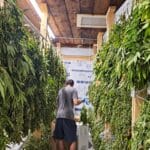
We hand-harvest our hemp and hang it in our atmosphere-controlled drying facility. Drying generally takes 7–14 days, followed by several more weeks of curing.
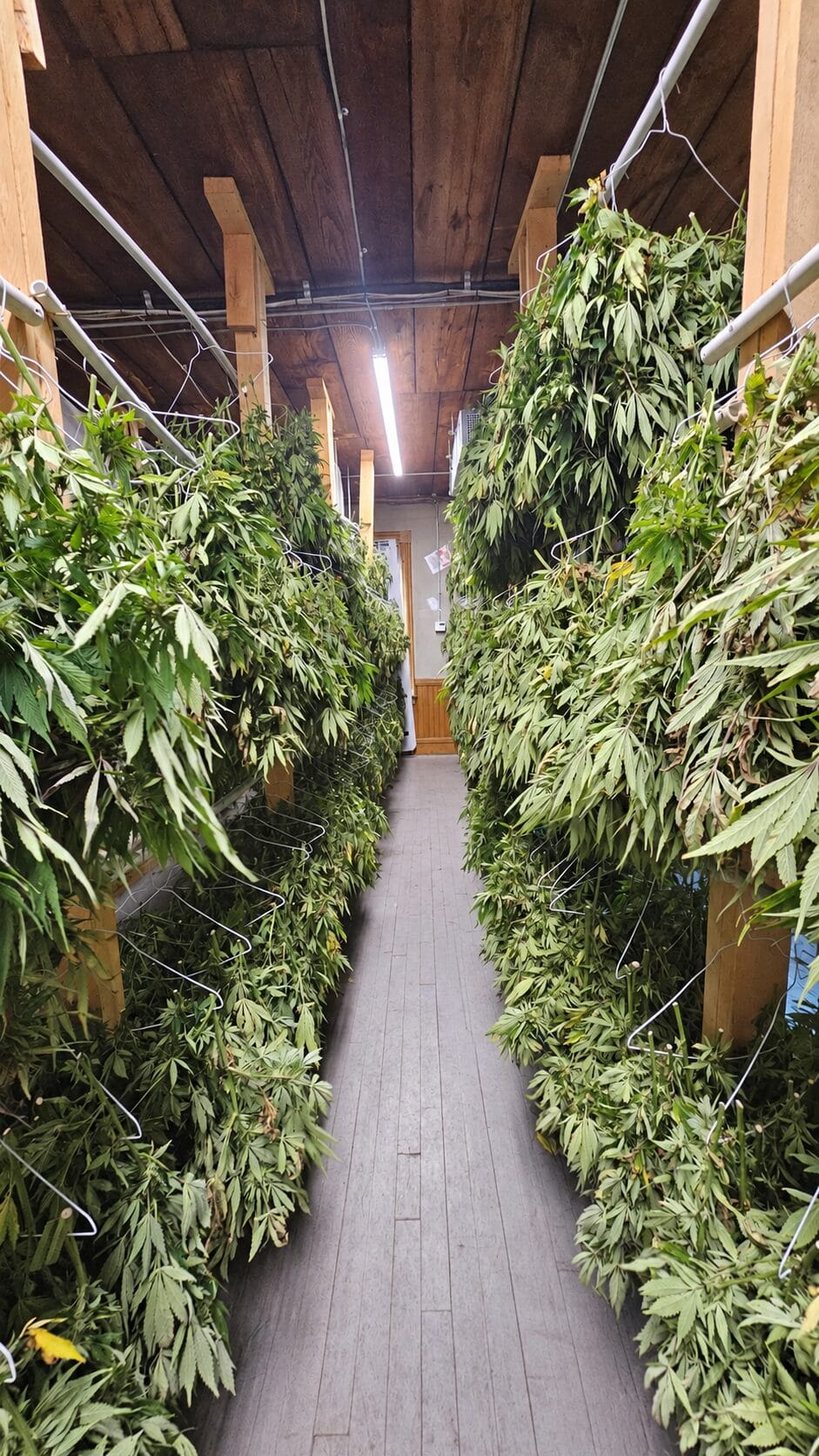
Temperature, humidity, and airflow all deserve attention during that process. We need to remove moisture while protecting the flower’s quality. Excessive drying temperatures can increase the loss of aromatic terpenes, changing the material before extraction even begins. How drying temperature affects terpene retention.
That’s why drying and curing are part of making the extract—not simply a waiting period between harvest and production.
From Hemp Resin to Full-Spectrum Extract
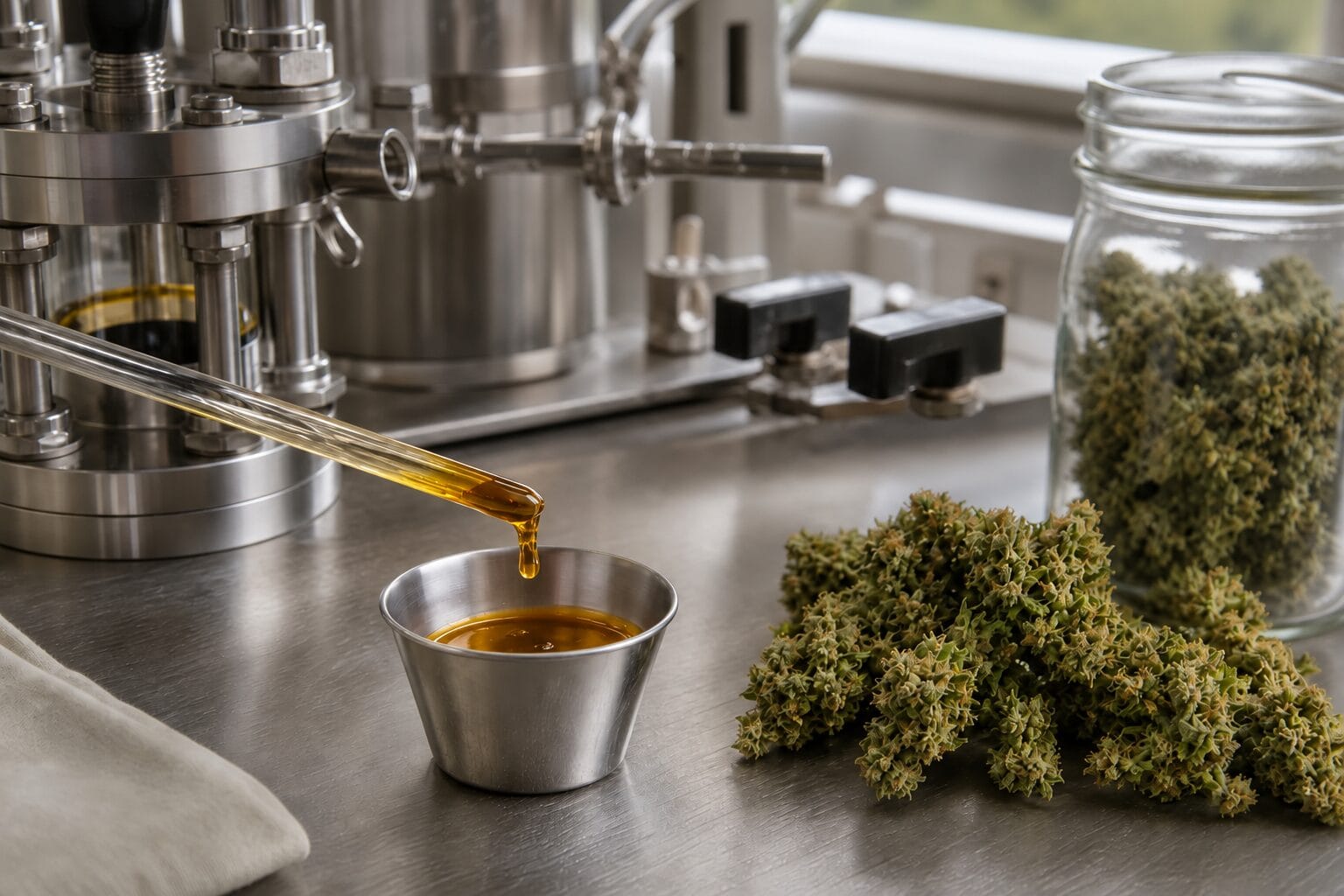
Extraction brings the resin’s compounds out of the flower and into a concentrated form.
We use subcritical CO₂ extraction with the aim of preserving a broad range of the flower’s naturally occurring compounds. Our choice of hemp variety, our handling of the harvest, and our extraction process all contribute to the resulting extract.
Reducing that extract to isolated CBD changes its composition. The CBD remains, but the other cannabinoids and aromatic compounds are no longer present as the flower originally supplied them.
Our approach puts value on that broader mixture. We grow particular varieties for a reason, and we want the finished extract to retain the character that made us choose them.
Quality Starts Before the Bottle
Understanding resin makes it easier to look beyond the milligram number on a label. The starting flower, the care it receives after harvest, and the way it’s extracted all matter.
For us, the work begins with those tiny resin glands in the field. Harvesting, drying, curing, and extraction are connected steps in bringing what the flower produces into the products we make.