Going Beyond Full Spectrum
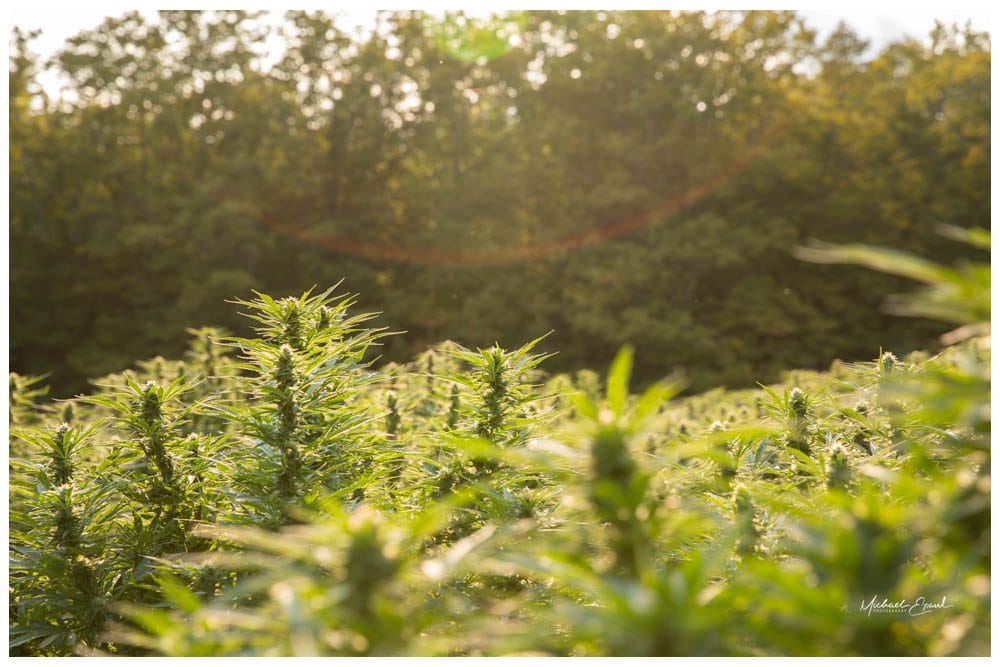
Quick takeaway: full spectrum is a good start, but it is not the whole standard. A hemp product can say “full spectrum” and still be made from weak inputs, refined ingredients, vague sourcing, or a formula that barely reflects the plant.
Full spectrum has become one of the most common phrases in hemp.
That is mostly a good thing. It tells people to look beyond CBD isolate and think about the wider plant profile.
But the phrase has also become easy to use loosely.
Two products can both say “full spectrum” on the front label and still be very different in the bottle. One may be made from quality flower, extracted gently, tested by batch, and kept close to the plant. Another may be made from low-cost biomass, refined into a generic ingredient, then blended into a formula that checks the label box.
Both may technically contain CBD and a small amount of THC.
That does not mean they carry the same plant profile.
At Western MA Hemp, we believe customers deserve more than a label claim. Full spectrum should be the floor, not the ceiling.
What Full Spectrum Usually Means
Full spectrum hemp extract usually means the extract contains CBD along with other naturally occurring compounds from the hemp plant.
That can include:
- CBD
- Small amounts of THC within the legal hemp limit
- Minor cannabinoids, such as CBG, CBC, or CBN
- Terpenes, which help give hemp its aroma and plant character
- Other plant compounds that occur naturally in hemp flower
That is different from CBD isolate, which is CBD separated from the rest of the plant.
For many people, full spectrum is a better place to start because hemp is not a single-compound plant. The plant makes a wider range of cannabinoids and aromatic compounds. Those compounds are part of why hemp is hemp.
But there is a problem.
The phrase “full spectrum” does not tell you how the hemp was grown, what part of the plant was used, how the extract was made, how much refinement happened, or whether the finished batch actually shows a meaningful plant profile.
Why We Say Full Spectrum Is Not Enough
Full spectrum can be useful language, but it is still just language.
A good hemp product should be able to answer the next set of questions.
What did it start as?
Quality starts before extraction.
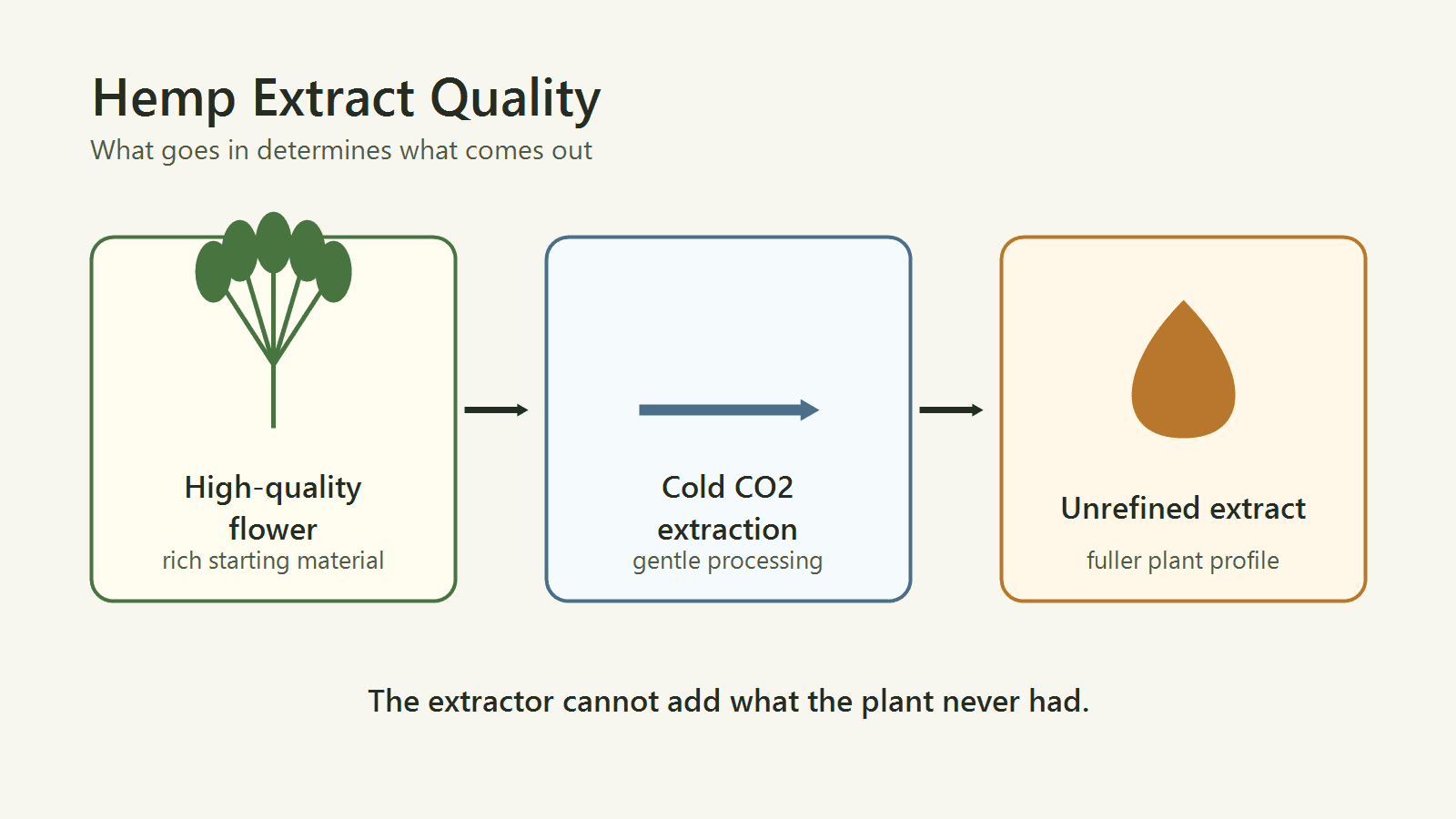
A product made from carefully grown hemp flower has a different foundation than a product made from leftover plant material. Biomass can still contain cannabinoids, but it is not the same as starting with resin-rich flower grown for cannabinoid and terpene expression.
If the input is weak, the finished product often needs more correction later.
How was it extracted?
Extraction is not just a technical step. It shapes the final product.
Some methods are built for speed, yield, and scale. Others are gentler and better suited to preserving delicate compounds. We use cold CO2 extraction because our goal is preservation, not maximum industrial output.
That choice matters because cannabinoids, terpenes, and other plant compounds can be changed or reduced by aggressive processing.
Was it refined after extraction?
This is where many full spectrum products become less full than customers expect.
Extract can be distilled, deodorized, filtered, isolated, remixed, or standardized into a more predictable ingredient. That can make manufacturing easier. It can also move the product further away from the original flower.
We keep our extract unrefined because we are trying to preserve the plant profile, not strip it down and rebuild it.
Can you verify it?
A full spectrum claim should not rely on trust alone.
A current Certificate of Analysis, often called a COA or lab report, should show what cannabinoids are present in the batch. It should also help confirm potency and quality. The front label can start the conversation, but the lab report gives you the details.
Going Beyond Full Spectrum Means Looking at the Whole Standard
When we say we go beyond full spectrum, we do not mean we are inventing a new buzzword.
We mean the product should be judged by more than one phrase on the label.
For us, the standard has three parts: Promote, Preserve, Deliver.
Promote the plant’s natural expression
You cannot preserve what was never there.
That is why the growing side matters. Genetics, soil, harvest timing, drying, curing, and flower handling all influence the plant before extraction ever begins.
Our goal is to start with quality hemp flower that expresses a real plant profile. CBD matters, but so do the supporting compounds that give each hemp variety its character.
Preserve the profile through extraction
Once the flower is grown, the next job is to protect what the plant made.
Cold CO2 extraction helps us pull the hemp extract without leaning on harsh solvent cleanup or heavy refinement. It is not the fastest or easiest way to make a commodity ingredient, but it fits our goal: keep the extract true to the plant.
Deliver it in a simple product
The final formula should not hide the extract.
That is why our oils use hemp extract and hemp seed oil. Simple ingredients make it easier to understand what you are taking. They also keep the product connected to hemp instead of turning it into a candy-flavored delivery system.

What Other Full Spectrum Products May Miss
This is not about saying every other brand is bad.
It is about being honest about how the hemp market works.
Many brands do not grow hemp. They do not extract it. They do not formulate from their own flower. They buy ingredients from suppliers, build products around a format, and use the label language customers already recognize.
That model can produce a legal product. It can also produce a clean-looking label.
But it often leaves important questions unanswered:
- Was the extract made from flower or biomass?
- Was the extract kept unrefined or heavily processed?
- Does the lab report show more than CBD?
- Are the ingredients simple and understandable?
- Does the brand explain its process clearly?
If those answers are hard to find, the full spectrum claim may not tell you much.
How to Read a Full Spectrum Label More Carefully
You do not need to become a chemist to choose a better hemp product.
Start with a few practical checks.
Look for “hemp extract,” not just “CBD”
CBD is one compound. Hemp extract should point to a broader plant ingredient. A product can list CBD in big letters on the front and still give you very little information about the rest of the extract.
Check the lab report for minor cannabinoids
A fuller product often shows more than CBD. You may see small amounts of other cannabinoids, depending on the product and batch. Those details help show whether the product has a broader plant profile or is built around a narrow ingredient.
Read the ingredient list
Simple is usually easier to understand.
If a product needs a long list of flavors, sweeteners, fillers, colors, and additives, ask whether the format is doing more work than the hemp itself.
Ask how the extract is made
Good brands should be able to explain their process in plain language. If the explanation is vague, that is useful information too.
Full Spectrum Still Has Limits
Going beyond full spectrum also means staying grounded.
Hemp products are not magic. Research on cannabinoids is still developing. People respond differently. Serving size, consistency, product type, and individual health factors all matter.
Some people may also prefer a THC-free product because of job testing, sensitivity, or personal comfort. That does not make them wrong. It just means the best product depends on the person.
For customers who do want a whole-plant hemp product, full spectrum should be paired with better questions: How was it grown? How was it extracted? What does the lab report show? What else is in the product?
Why This Matters for Customers
The hemp aisle can be confusing because many products look similar online.
A bottle can have clean design, a strong milligram number, and the words “full spectrum” on the front. That still does not tell you whether the product is true to the plant.
When you go beyond full spectrum, you stop shopping by buzzword alone.
You start looking for a product with a clear story from flower to bottle:
- Quality hemp flower
- Gentle extraction
- Less unnecessary refinement
- Batch-specific lab testing
- Simple ingredients
- A brand willing to explain its process
That is the difference between buying a hemp label and choosing a hemp product.
Helpful Next Reads
If you want to keep learning, these guides build on the same idea:
Frequently Asked Questions
What does full spectrum hemp extract mean?
Full spectrum hemp extract usually means the product contains CBD plus other naturally occurring hemp compounds, including small amounts of THC within the legal hemp limit. It may also include minor cannabinoids and terpenes.
Why is full spectrum not enough by itself?
The phrase does not tell you the quality of the starting material, the extraction method, the level of refinement, the ingredient list, or the actual cannabinoid profile shown on the lab report.
Is unrefined hemp extract the same as full spectrum?
Not exactly. Full spectrum describes the type of plant profile a product is meant to contain. Unrefined describes how much the extract has been left intact after extraction. A product can be called full spectrum and still be heavily refined.
Should I only buy full spectrum CBD?
Not always. Full spectrum is a strong choice for people who want a broader hemp profile, but some people prefer THC-free products because of testing, sensitivity, or personal preference. The right choice depends on your needs.
How can I tell if a product is truly full spectrum?
Read the Certificate of Analysis for the batch. Look for CBD plus other cannabinoids, confirm the THC level, and check that the brand explains how the extract is made.
Does full spectrum hemp extract get you high?
Legal hemp products must stay within the federal THC limit. Full spectrum hemp extract can contain trace THC, but it should not be formulated to produce the intoxicating effect associated with marijuana. People who are sensitive to THC or subject to testing should review lab reports carefully.
The Bottom Line
Full spectrum is a useful starting point.
But it should not be the only standard.
At Western MA Hemp, we go beyond full spectrum by focusing on the whole path: quality hemp flower, cold CO2 extraction, unrefined extract, simple ingredients, and batch-specific lab results.
That is what we mean by true to the plant.
Browse Western MA Hemp’s full spectrum CBD and CBG products, learn more about our hemp flower extract, or review current lab results before choosing your next product.
Hemp products are not intended to diagnose, treat, cure, or prevent any disease. Research on cannabinoids and hemp extract is still developing. Always review current lab results and speak with a healthcare professional if you are pregnant, nursing, taking medication, or managing a medical condition.