Minor Cannabinoids
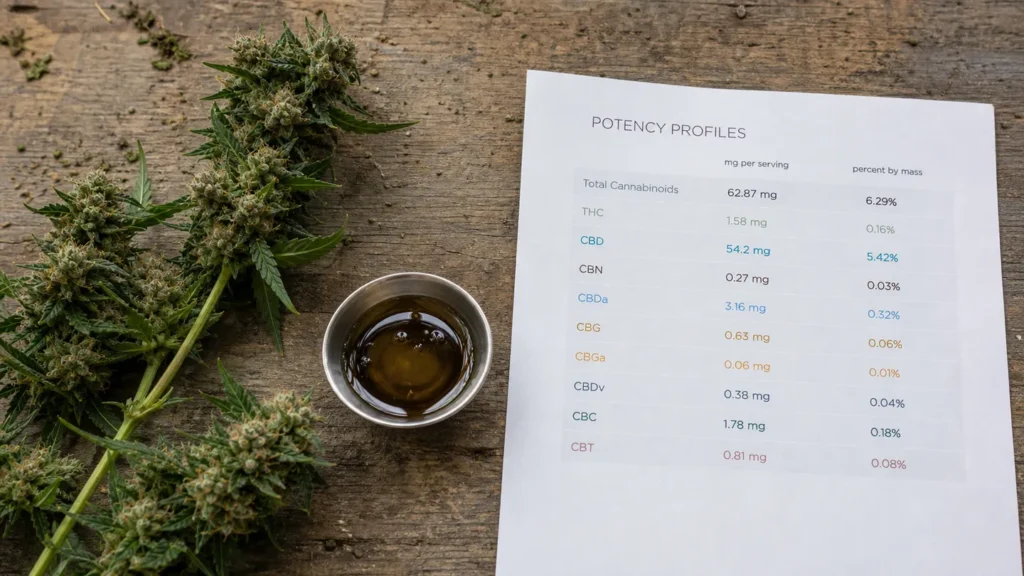
At Western MA Hemp, we have never believed hemp should be reduced to one number on a label.
CBD may be the most abundant cannabinoid in our CBD-rich plants, but it is not the whole plant. Growing alongside it are CBG, CBC, CBDV, CBN, THCV, and many other cannabinoids that occur in much smaller amounts.
These are known as minor cannabinoids.
They are called minor because of how little of them the plant produces, not because they have a minor role in the overall hemp experience. They are part of the natural chemistry that makes one variety feel different from another and part of the broader profile people are looking for when they choose a true full spectrum product.
They are also some of the hardest compounds to carry from field to bottle.
Minor cannabinoids are more delicate than the major cannabinoids that dominate a lab report. Heat, pressure, oxygen, time, and aggressive refinement can change them or strip them away. A finished extract can still contain plenty of CBD after the smaller parts of the plant’s chemistry have been lost.
That is why preserving minor cannabinoids takes more than adding the words “full spectrum” to a label. It takes the right genetics, careful farming, patient handling, and an extraction process built around preserving the plant rather than simplifying it.
That is what True to the Plant means to us.
Minor Only Describes the Amount
Hemp plants make a family of cannabinoids, not CBD by itself.
CBG and its raw form, CBGA, are part of the pathway the plant uses to create other cannabinoids. CBC and CBCA are naturally present in many hemp varieties. CBDV, THCV, CBT, and CBN may appear in smaller or trace amounts depending on the genetics, maturity, and condition of the flower.
The word minor is relative. CBG is a minor cannabinoid in most CBD-dominant hemp, but it becomes the major cannabinoid in a CBG-dominant variety such as White CBG. THC may be a major cannabinoid in marijuana but appears only in small amounts in compliant CBD hemp.
The plant does not assign importance according to which number is largest. Each variety produces its own balance, and that balance is part of its identity.
Research on individual minor cannabinoids is still developing, so we do not believe in assigning one guaranteed benefit to each compound. Hemp does not work like a collection of isolated switches. The overall experience comes from the complete profile: major cannabinoids, minor cannabinoids, raw acidic cannabinoids, terpenes, flavonoids, and the natural ratios in which they grew together.
Our article on why the hemp plant is greater than CBD explores that whole-plant view in more detail.
The Most Delicate Parts of Hemp Are the Easiest to Lose
Minor cannabinoids do not have the same durability as abundant CBD and THC. Many are more sensitive to temperature, pressure, oxidation, and repeated processing.
That creates a challenge for anyone making hemp products. The processor has to extract enough oil to create a useful and consistent product without destroying the chemistry that made the flower valuable in the first place.
High heat can decarboxylate raw cannabinoids, changing CBGA into CBG, CBCA into CBC, and CBDA into CBD. Decarboxylation can be useful, but more conversion is not always better. Continued heat can change or degrade delicate compounds, while volatile terpenes can evaporate away.
Pressure changes which compounds are pulled from the flower and how the extraction behaves. Aggressive pressure may improve speed or yield, but it can move the process away from the natural profile of the starting material.
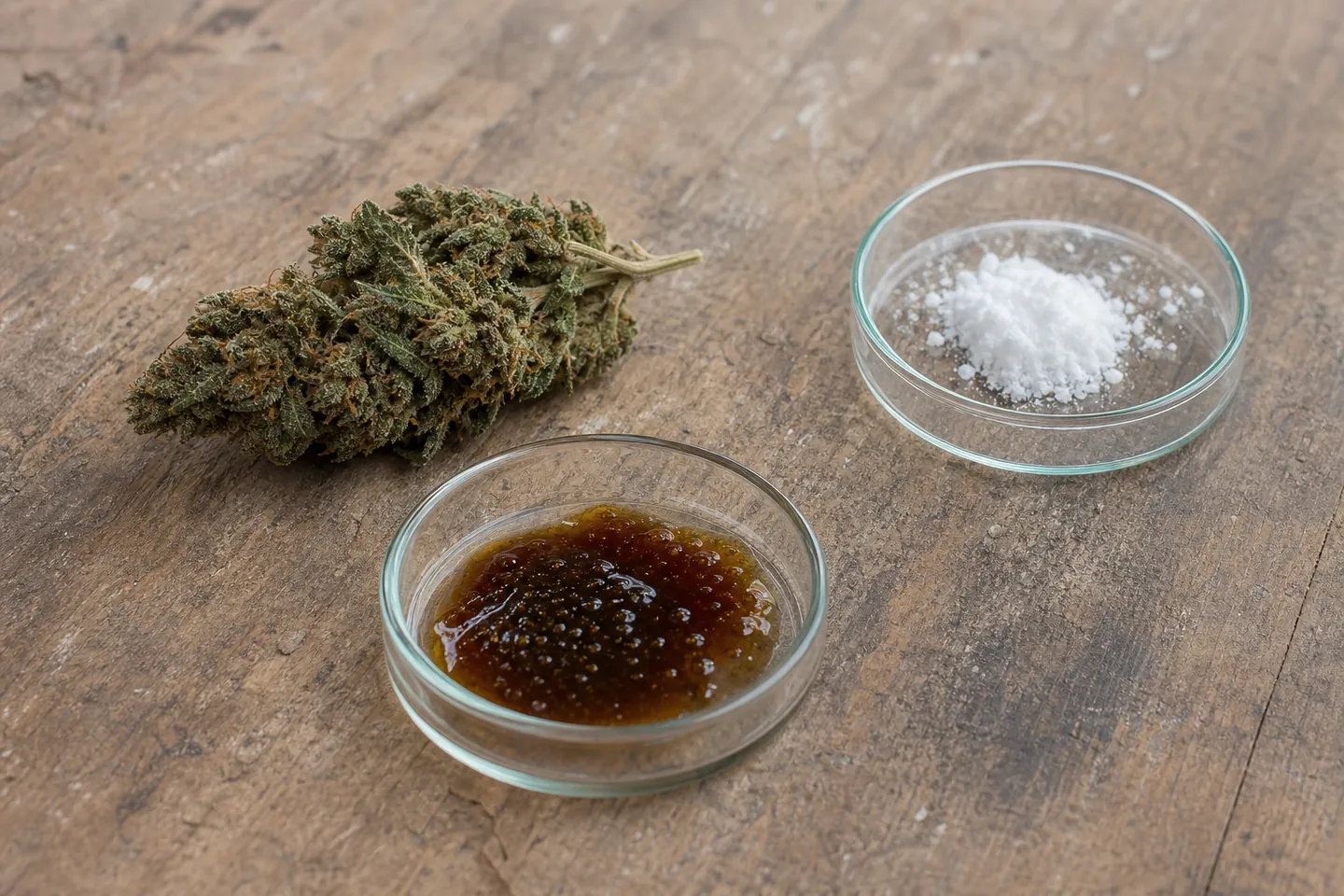
Then comes refinement. Winterization, distillation, chromatography, and repeated filtration can create a pale, standardized ingredient with a high CBD percentage. They can also remove minor cannabinoids, raw acidic cannabinoids, terpenes, flavonoids, pigments, and other parts of the flower.
By the end, the extract may look cleaner and test higher for CBD, but it is less complete as hemp.
This is where craft matters. The goal is not to avoid heat and pressure entirely. They are necessary tools. The craft is working within a careful window where we can make a stable product while preserving as much of the plant as possible.
Read what decarboxylation does to hemp for a closer look at that balance.
True to the Plant Starts Before Extraction
Minor cannabinoid preservation begins with the seed.
Different hemp varieties naturally produce different cannabinoid and terpene profiles. Lifter is not the same plant as Bubba Kush. Sour Space Candy is not the same as White CBG. Their differences are not flavoring added after extraction. They were created in the flower as the plant grew.
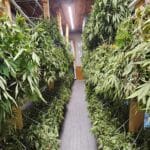
We choose varieties because they have something worth preserving. We grow them on our Western Massachusetts farm, harvest them with care, and keep their flower in separate strain-specific batches.
This matters because anonymous biomass has already lost much of its identity. When stalks, leaves, trim, and mixed varieties are processed together, the finished ingredient may contain CBD, but it no longer represents a particular plant.
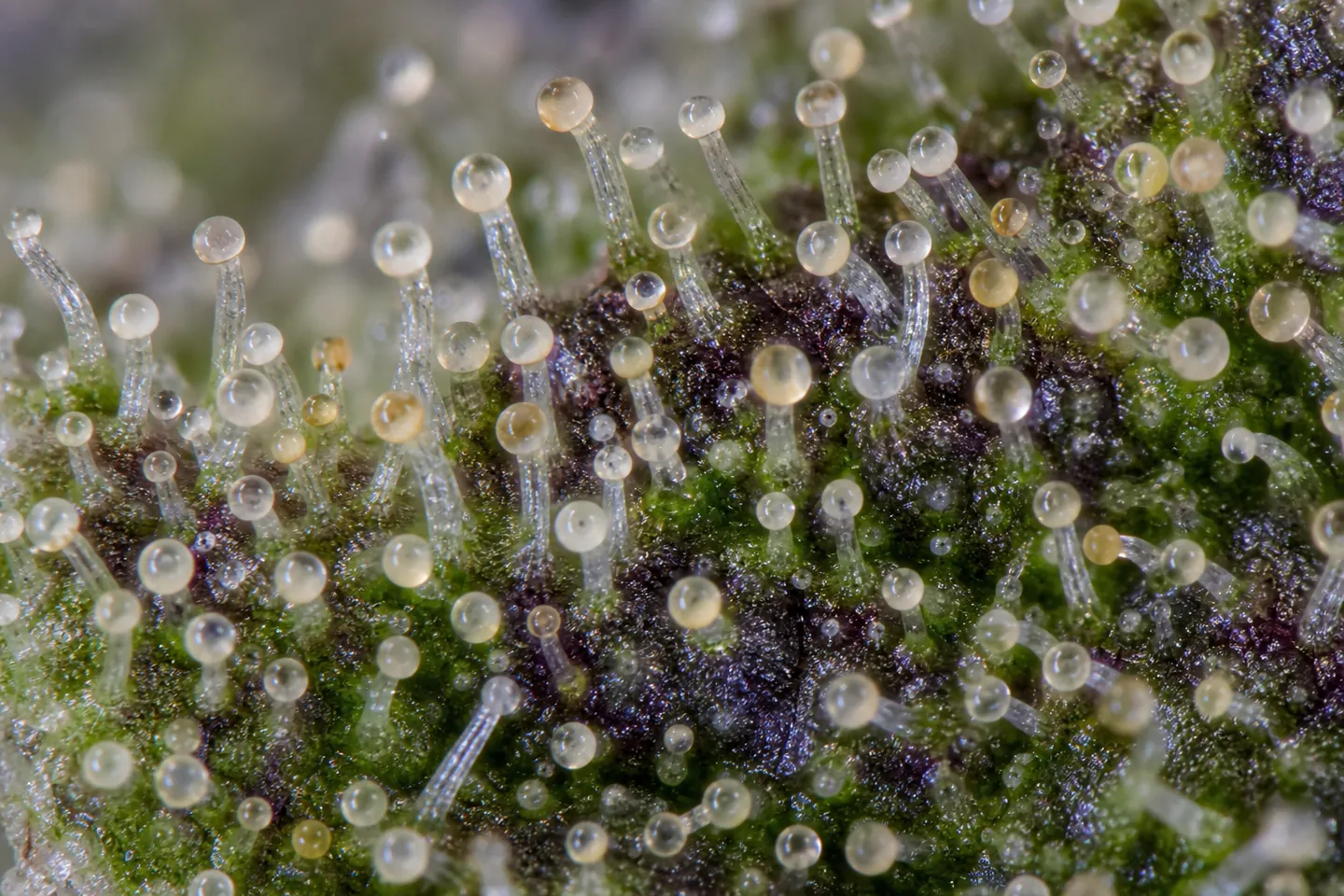
We extract flower instead. The flower holds the resin-rich trichomes where cannabinoids and terpenes are concentrated. Starting with better material allows us to use less aggressive processing and gives the finished extract a real connection to the crop.
Our guide to the different varieties of hemp explains why strain selection matters to the final experience.
Our Extraction Is Designed to Preserve, Not Strip
Western MA Hemp uses controlled subcritical CO2 extraction. Subcritical CO2 works at lower temperatures and pressures than more aggressive supercritical methods, allowing us to protect delicate cannabinoids and terpenes while pulling the oil from the flower.
Our parameters are adjusted around preservation. We are not trying to force every possible drop from the plant or create the highest CBD percentage at the expense of everything else.
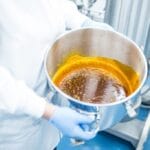
We also keep the extract unrefined. We do not winterize or distill it into a generic cannabinoid ingredient. The finished extract keeps its natural amber color, plant character, raw and neutral cannabinoids, minor cannabinoids, terpenes, flavonoids, and other compounds captured from the flower.
No extraction can leave the plant completely unchanged. The craft is making as few unnecessary changes as possible.
That is why our oils are simple. We take our strain-specific full spectrum hemp extract and blend it with organic hemp seed oil. We do not need to rebuild the formula with isolated cannabinoids, added terpenes, artificial flavor, or synthetic ingredients.
Learn more about our subcritical CO2 hemp flower extraction.
Preserving a Cannabinoid Is Not the Same as Creating One
As interest in minor cannabinoids has grown, so has the market for isolated and converted cannabinoid ingredients.
An isolate is a cannabinoid that has been separated and purified from the rest of the plant. It may still have begun in hemp, but it no longer carries the natural profile in which it grew.
A converted cannabinoid goes a step further. A more abundant cannabinoid, often CBD, is chemically changed into a different compound. Manufacturers can use acids, solvents, catalysts, heat, and extensive refinement to make cannabinoids that the starting plant produced only in tiny amounts or did not produce at the concentration found in the product.
This is common with delta-8 THC and other intoxicating hemp-derived cannabinoids. It is also used by some manufacturers to create or concentrate rare cannabinoids that would otherwise be expensive to obtain naturally.
The resulting ingredient may have started with hemp-derived CBD, but that does not make it equivalent to a cannabinoid preserved from the flower. One was kept through careful processing. The other was manufactured through conversion.
Conversion also creates new questions about residual solvents, acids, reaction byproducts, and unintended compounds. The FDA has warned that some delta-8 production can involve potentially harmful chemicals and contaminants. Those risks make transparent processing and appropriate finished-product testing especially important.
Western MA Hemp does not rely on conversion to create minor cannabinoids. We preserve the cannabinoids our plants naturally produce.
That difference is fundamental to our products. We do not believe the best way to capture hemp is to strip it down, convert isolated ingredients, and try to reassemble the plant afterward.
A Lab Report Should Show More Than CBD
Minor cannabinoids may be delicate, but they should not be invisible in every product claiming to be full spectrum.
A batch-specific Certificate of Analysis shows which cannabinoids the laboratory detected in the flower or finished product. Western MA Hemp flower reports show CBD and CBDA alongside naturally occurring compounds such as CBG, CBGA, CBC, CBCA, CBDV, and others, depending on the variety and batch.
The finished-product report helps show what survived extraction and formulation.
When reviewing a full spectrum product, look past the total CBD. Check whether the report includes multiple cannabinoids and whether acidic forms such as CBGA or CBDA remain. Review the terpene results when they are available. Make sure the report matches the batch number on the product.
A lab report cannot tell you exactly how a product will feel, but it can tell you whether the product still has a measurable connection to the plant or whether it has been reduced mostly to one compound.
You can review our current Western MA Hemp lab results and learn more in our guide to reading a hemp product lab test.
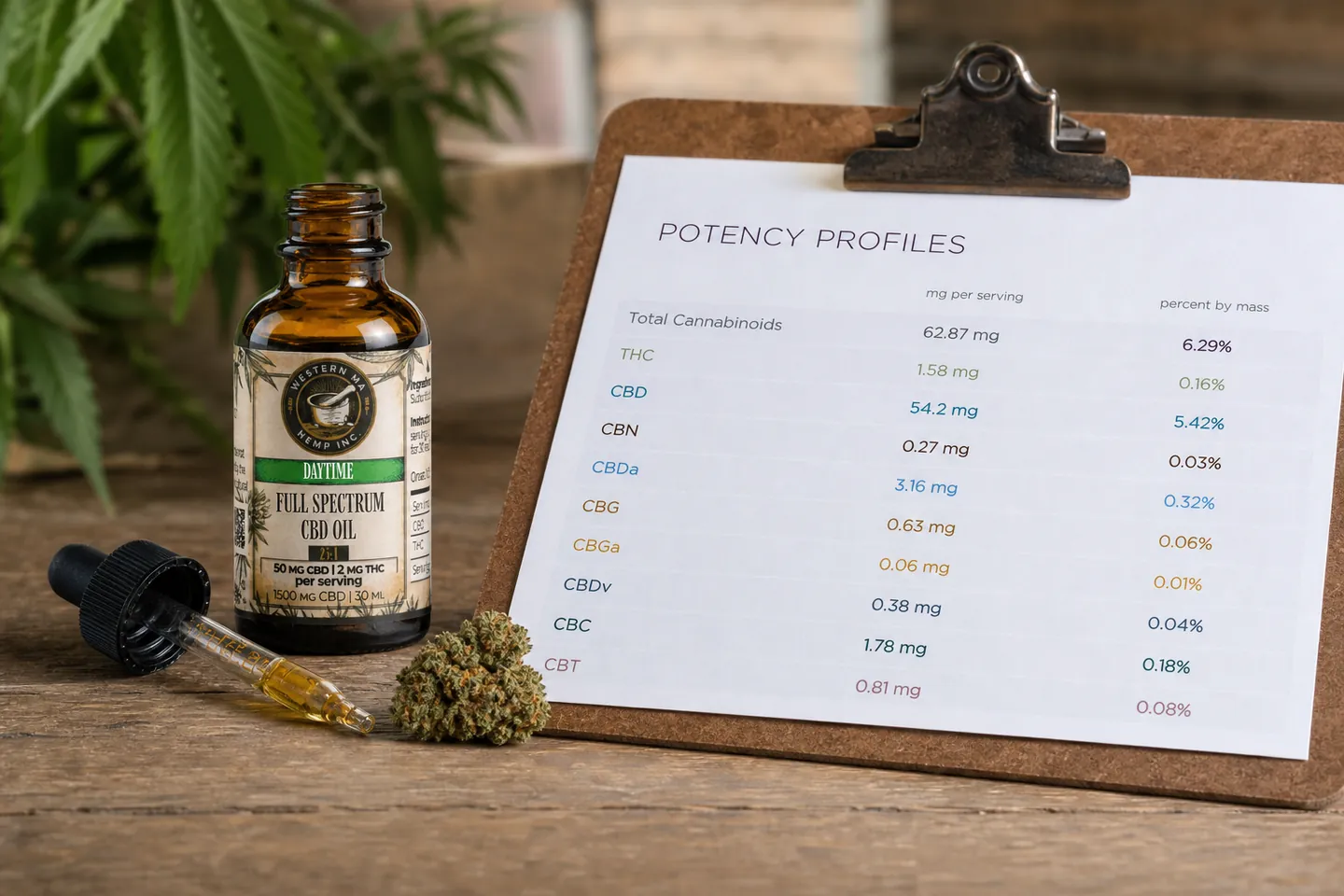
Full Spectrum Should Mean the Plant Is Still There
The hemp industry has trained people to shop by CBD milligrams. That number matters, but it does not tell the whole story.
Minor cannabinoids help complete the profile. They are produced in smaller amounts, they are more delicate, and they require more care to preserve. Losing them is easy. Keeping them takes craft.
At Western MA Hemp, that craft begins in the field and continues through every step of extraction. We grow distinct varieties, use resin-rich flower, work in strain-specific batches, control temperature and pressure, keep our extract unrefined, and avoid chemical conversion.
We do this because hemp is more than CBD.
True full spectrum should not mean one dominant cannabinoid with a few ingredients added back. It should mean the plant is still recognizable in the finished product.
That is our standard. True to the Plant, from field to bottle.
FAQ
Why are they called minor cannabinoids?
They are called minor cannabinoids because hemp produces them in smaller amounts than dominant cannabinoids such as CBD. Minor describes their concentration, not their importance to the plant’s complete profile.
Which minor cannabinoids occur naturally in hemp?
Hemp may naturally contain CBG, CBC, CBDV, CBN, THCV, CBT, and their raw acidic forms, including CBGA, CBCA, CBDVA, and THCVA. The exact profile depends on the plant variety and how it was grown, harvested, stored, and processed.
Why are minor cannabinoids difficult to preserve?
Minor cannabinoids are delicate and can be changed or lost through heat, pressure, oxidation, time, and heavy refinement. Preserving them requires careful handling and extraction parameters designed around the complete plant profile rather than maximum CBD yield alone.
Are minor cannabinoids non-intoxicating?
Many minor cannabinoids found in CBD hemp, including CBG and CBC, are non-intoxicating. The category also includes compounds with different effects, so consumers should review the specific cannabinoid, serving, product label, and lab report.
Is a cannabinoid isolate natural?
An isolate may begin with a cannabinoid naturally extracted from hemp, but purification separates it from the other compounds in the plant. It is different from a full spectrum extract and different from a cannabinoid created through chemical conversion.
What is a converted cannabinoid?
A converted cannabinoid is made by chemically changing one cannabinoid into another. Many commercial delta-8 THC products, for example, are made by converting hemp-derived CBD because the plant produces too little natural delta-8 for direct extraction at that scale.
How can I tell whether a product preserves minor cannabinoids?
Review the ingredient list, source-flower information, extraction method, and batch-specific lab report. A well-preserved full spectrum product should show more than CBD and should have a clear connection to the variety from which it was made.
Does Western MA Hemp use converted cannabinoids?
No. Western MA Hemp preserves cannabinoids naturally produced by its hemp plants. We use strain-specific flower, controlled subcritical CO2 extraction, and an unrefined process without chemical conversion.