Our Massachusetts Hemp Fields in August
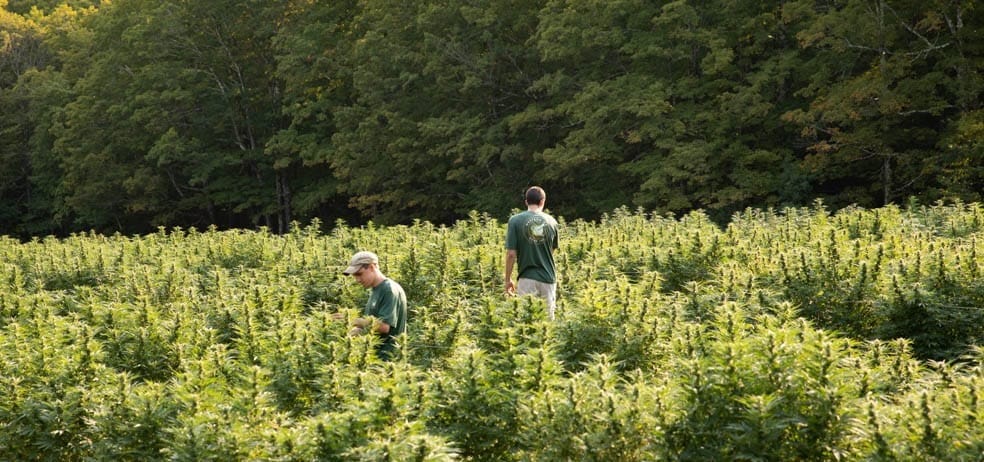
August is when a hemp field begins to reveal what it has been building toward all summer.
The plants have spent the early growing season establishing roots, reaching toward the sun, and developing the structure that will eventually hold their flowers. As the days begin to shorten in Western Massachusetts, their attention starts to shift. Instead of putting all their energy into growing taller and wider, the plants begin preparing to flower.
This transition is one of the most important stages of the season. The flowers that develop over the coming weeks will carry the cannabinoids, terpenes, flavonoids, resins, and natural oils that give each hemp variety its identity. Everything we have done up to this point—from preparing the soil to selecting the genetics—has helped create the conditions for that chemistry to develop naturally.
For us, the hemp plant is not simply a source of CBD. It is a complete living plant, and August is when that completeness begins to become visible in the field.
August Is When the Field Begins to Change
During the earlier part of the season, hemp is primarily focused on vegetative growth. The plants build stalks, branches, leaves, and root systems. By August, the shortening daylight signals that it is time to move toward flowering.
The change does not happen all at once. Small flower sites begin forming where the branches meet the main stalk. Those sites gradually fill out and become more defined. The field starts to look denser, and each variety begins showing more of its individual structure.
Some plants grow tall and open, allowing plenty of air to move between their branches. Others stay shorter and bushier. Some begin producing noticeable aromas early in flower, while others develop their strongest character later in the season.
These differences are part of why we believe hemp variety matters. Two hemp plants can both be rich in CBD and still grow, smell, and feel completely different. The CBD number is only one part of the plant.
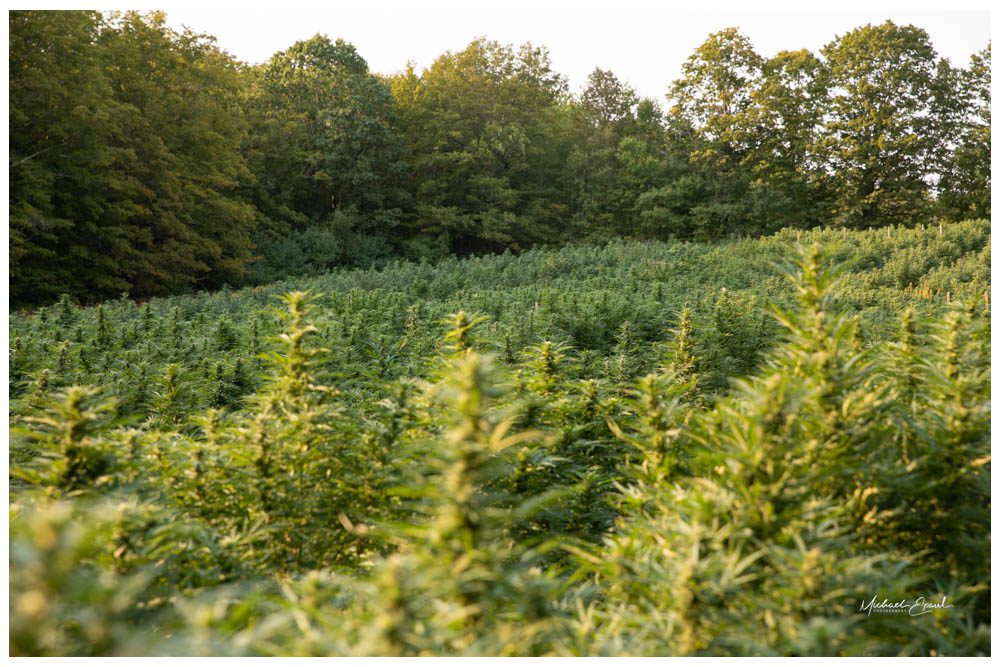
Healthy Flowers Begin With Healthy Soil
By the time flowers appear, much of the foundation for the season has already been established below the surface.
Our two-acre farm in Chesterfield is managed with organic practices that support the soil rather than treating it like an empty material that simply holds plants upright. Compost adds organic matter. Cover crops protect and feed the ground. Minimal tilling helps preserve the structure and life within the soil.
Healthy soil supports strong roots, and strong roots help the plant make use of water and nutrients throughout the season. That becomes especially important during flowering, when the plant is supporting both its existing growth and the development of cannabinoid- and terpene-rich flowers.
This is why cultivation is the cornerstone of everything we make. Processing cannot recreate what was never grown into the flower. A finished hemp product can only preserve the chemistry the plant was able to produce in the first place.
You can learn more about our growing methods on our Massachusetts hemp farm page.
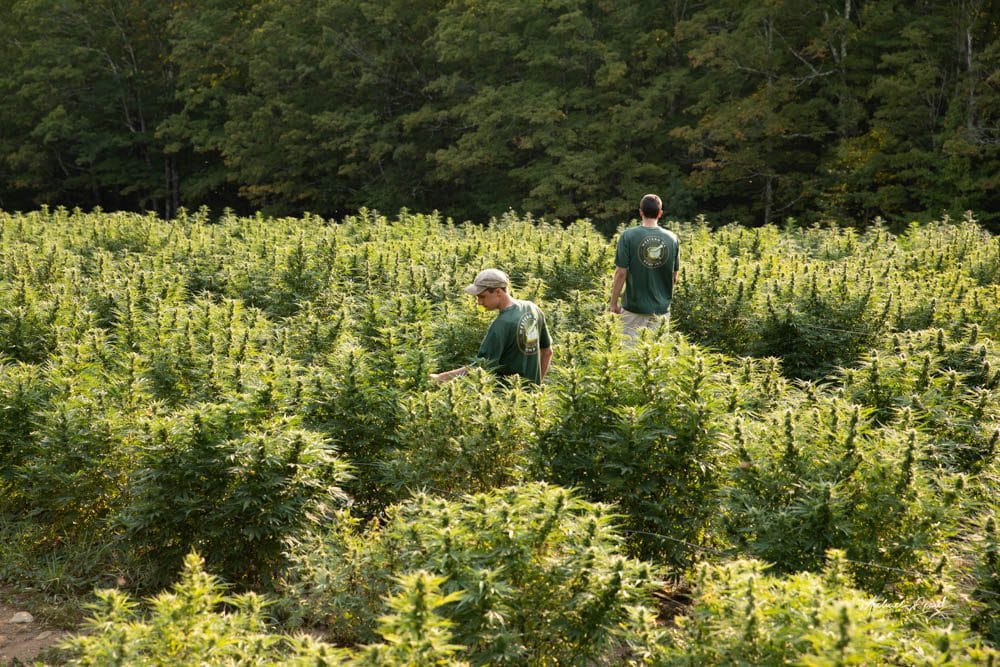
Each Hemp Variety Begins Showing Its Character
August is also when the differences between hemp varieties become easier to see and smell.
Every variety carries its own genetics. Those genetics influence how the plant grows and the natural profile it develops. One variety may grow with bright citrus, pine, or floral aromas. Another may lean toward earth, herbs, pepper, or deeper fruit notes.
Those aromas come from terpenes. Terpenes are produced alongside cannabinoids and help give each flower its direction. They are one reason a daytime hemp variety can feel different from one selected for the evening, even when both contain CBD.
As flowering progresses, the aromas in the field become more distinct. Walking from one section to another can feel like moving between completely different gardens. The change is not created by adding flavor later. It comes directly from the living plants.
Our guide to terpenes in hemp explains how these natural compounds help distinguish one variety from another.
The Plant Is Building More Than CBD
The flower forming in August is not producing CBD alone.
Inside the developing resin glands, the plant is building a much broader chemical profile. That includes major cannabinoids, smaller amounts of minor cannabinoids, acidic cannabinoids, terpenes, flavonoids, resins, and natural oils.
These compounds develop together. Their proportions change as the flower matures, and the complete profile is what gives the plant its individual character.
This is central to our True to the Plant approach. We do not grow hemp simply to remove one molecule from everything surrounding it. We grow for the complete flower and work to carry that natural chemistry into the finished product.
Minor cannabinoids are especially easy to overlook because they appear in smaller amounts. Smaller does not mean unimportant. Our article about minor cannabinoids in hemp explains why preserving these delicate compounds begins in the field.
August Fieldwork Is About Protection and Attention
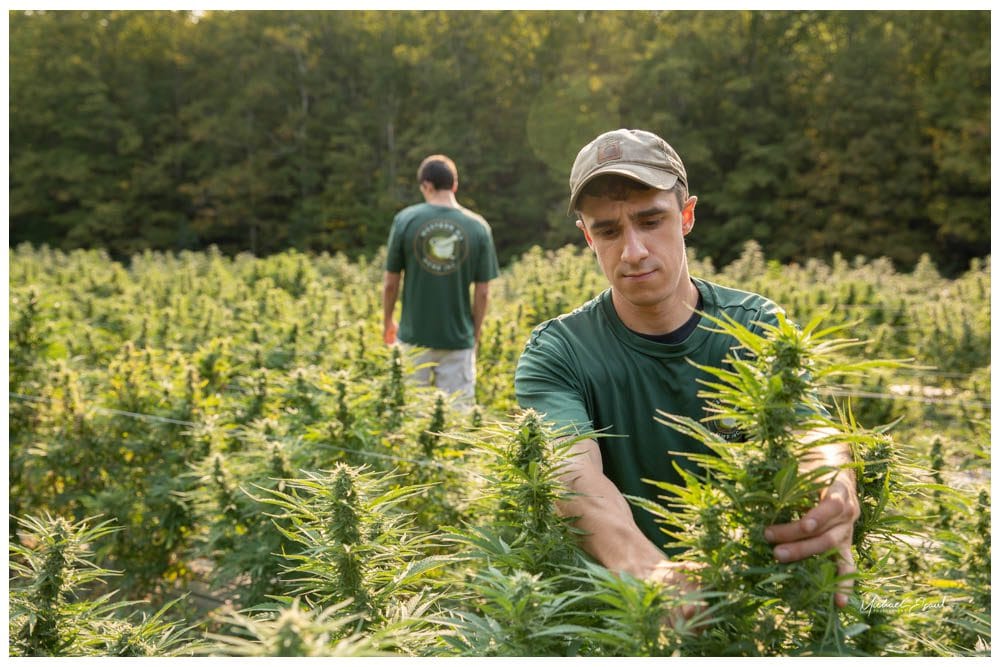
Flowering plants need close attention.
As the flowers become denser, air movement and moisture matter more. We watch the weather, inspect the plants, maintain space around them, and look closely for anything that could interfere with healthy flower development.
This work is hands-on. Hemp farming is not a matter of planting in spring and returning at harvest. The field changes every day, and caring for it requires being present enough to notice those changes.
We grow without synthetic sprays or shortcuts. That choice means working with the plant and its environment instead of trying to overpower them. It also means that every decision made in August can affect the quality of the flower we bring in later.
Harvest Decisions Begin Before Harvest Day
Harvest may still be weeks away, but preparation begins long before the first plant is cut.
Different varieties mature on different timelines. Weather can accelerate or slow development. The appearance of the flowers, the condition of the resin, the aroma, and the plant’s overall maturity all help determine when a variety is ready.
Harvesting is not simply choosing a date on the calendar. The goal is to bring in the flower when its natural profile has developed properly and then protect that profile through drying, curing, extraction, and formulation.
That is why the path from field to finished product has to be connected. Growing, harvesting, drying, and processing are not separate stories. They are stages in one continuous effort to preserve what the plant created.
Our article on how hemp extract is made follows that journey beyond the field.
Why We Still Grow Hemp in Massachusetts
Growing hemp in Western Massachusetts is not the easiest or cheapest way to make a hemp product. Our season is limited, the weather is unpredictable, and the work cannot be separated from the land.
We continue growing here because the farm gives us a direct relationship with the plant. We know the genetics we planted, how the soil was cared for, what the plants experienced during the season, and how the flowers were handled after harvest.
That connection cannot be replaced by purchasing anonymous bulk extract and building a product around a number on a laboratory report.
When you know the field, you know where the product begins. Read more about why we still grow hemp in Massachusetts.
Come See the Hemp Fields for Yourself
The best way to understand hemp is to experience the plant while it is growing.
We welcome visitors to our small farm in Chesterfield, Massachusetts for a behind-the-scenes look at how we grow, harvest, and make our products. A farm tour gives you the chance to walk through the field, see the differences between hemp plants, learn about the history and uses of hemp, and ask us questions directly.
August and the flowering season offer a particularly meaningful look at the farm because the plants are beginning to show the natural chemistry and character we work to preserve.
Sign up for a Western MA Hemp farm tour and come see where True to the Plant begins.
Frequently Asked Questions
Where is the Western MA Hemp farm?
Our two-acre hemp farm is located in Chesterfield, Massachusetts, in the hills of Western Massachusetts.
What happens in a Massachusetts hemp field during August?
As the days shorten, outdoor hemp plants begin shifting from vegetative growth toward flowering. Flower sites form, aromas become more noticeable, and the plants begin developing the cannabinoids, terpenes, resins, and oils that will define the mature flower.
When is hemp harvested in Massachusetts?
Harvest timing depends on the variety, weather, flower development, resin maturity, and the condition of the plants. Different varieties can be ready at different times, so harvest is guided by the plants rather than a single calendar date.
Can the public visit the farm?
Yes. Visitors can sign up for a farm tour to see how we grow and harvest hemp, learn about the plant, and ask questions. Visit our farm tour signup page to register.