Why Is Hemp Being Banned?
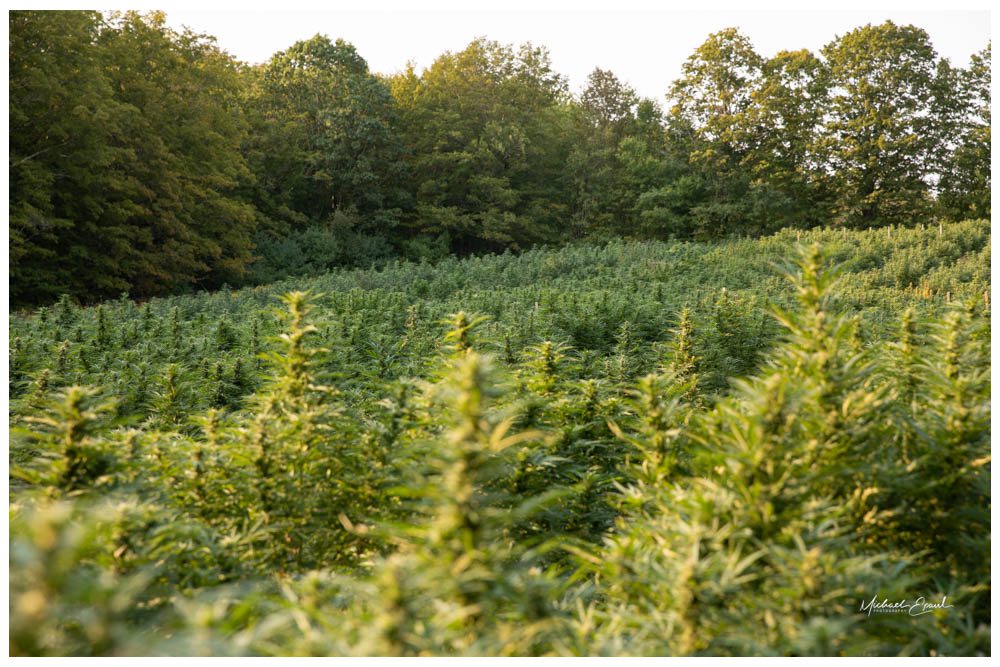
From our farm in Western Massachusetts · Policy checked November 20, 2026
Before most Americans had heard of a THC seltzer, they’d heard of a little girl named Charlotte Figi.
Charlotte had Dravet syndrome, a severe form of epilepsy. Her family reported that her seizures dropped dramatically after she began taking a cannabis extract rich in CBD, a compound in the plant that doesn’t cause a high. The variety used to make her extract was named Charlotte’s Web in her honor. Charlotte’s story changed the question people were asking about cannabis. Instead of arguing about whether someone should be allowed to get high, they were asking why a parent should have to fight for access to something that helped their child.
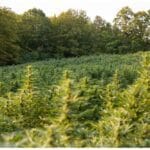
Nearly eight years after Congress opened the door to commercial hemp farming, the argument is back to who gets to sell a high. The 2026 federal hemp ban doesn’t outlaw all hemp. But the new limit aimed at intoxicating products also threatens full-spectrum CBD oils and capsules. How did we get from Charlotte’s Web to THC seltzers? From where we stood on our farm in Western Massachusetts, the turning point was a harvest.
The Farm Bills and the CBD boom: more hemp than buyers
The 2014 Farm Bill allowed hemp to be grown through research and state pilot programs. In June 2018, the FDA approved Epidiolex, a prescription CBD medicine for seizures associated with Dravet and Lennox-Gastaut syndromes. That December, the 2018 Farm Bill opened hemp farming beyond the pilot programs. Congress drew the line between hemp and marijuana at 0.3% delta-9 THC by dry weight. Delta-9 THC is the compound most responsible for a cannabis high.
The farm bills covered fiber and grain, too, but CBD was where much of the money went. Growers reported 32,464 planted acres of hemp in 2018 and 146,065 in 2019 to the USDA Farm Service Agency. In one growing season, the reported acreage more than quadrupled.
At the prices people were hearing that spring, it’s easy to understand the rush. Premium flower could fetch $500 to $1,000 a pound. Most farmers, though, were selling biomass: dried plant material a processor buys to extract the CBD. A pound of biomass containing 10% CBD was worth about $43 in July 2019 and $11 by November. In 2020, that same pound could bring as little as $5. Purified CBD, called isolate, tells the longer story: bulk CBD had commanded upwards of $40,000 a kilogram in the early years. Eventually, isolate traded closer to $400.
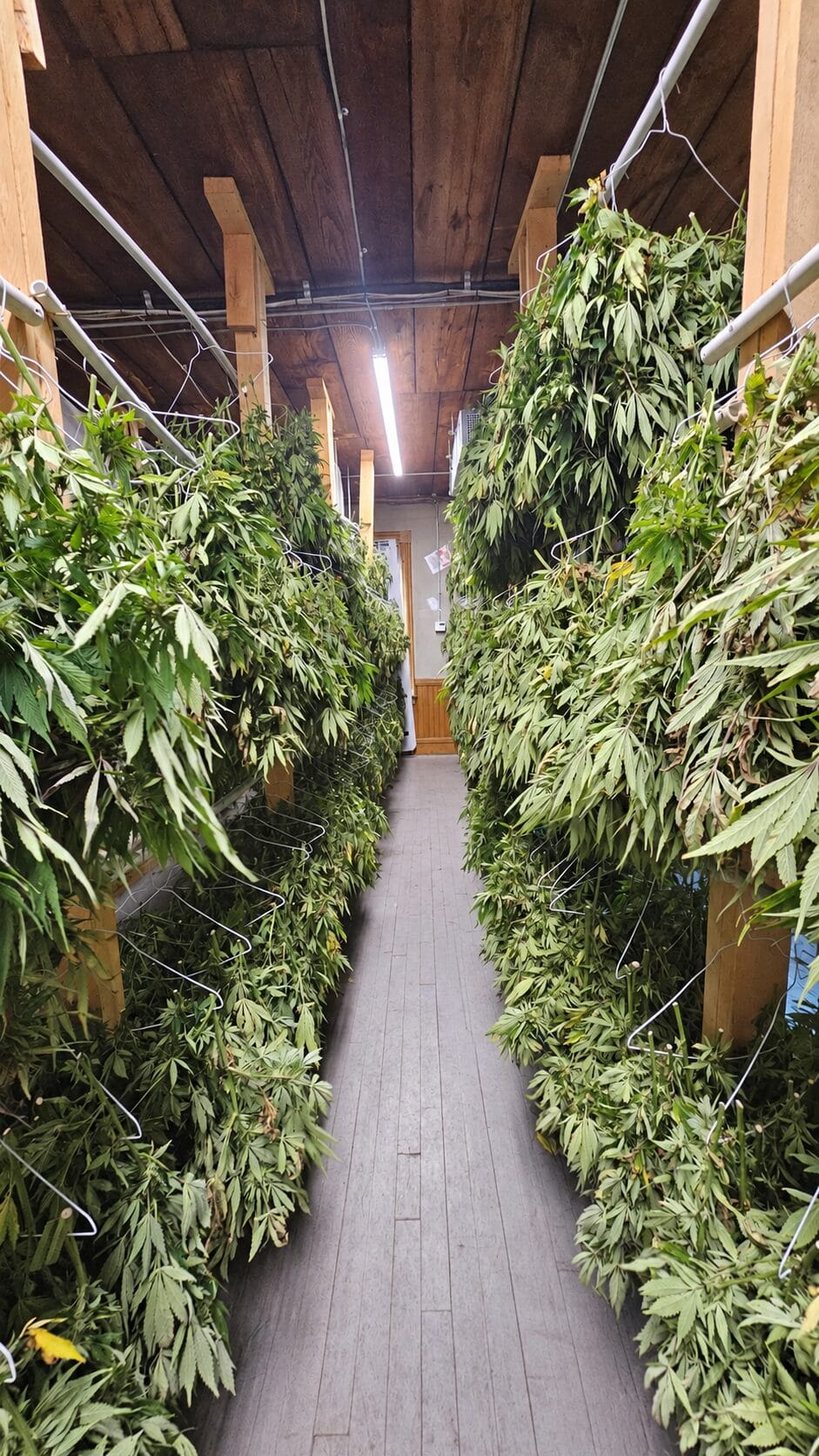
By harvest, farmers had already paid for seed, a summer’s worth of labor, and a place to dry the crop. Now they had barns full of hemp and few buyers. The processors those farmers counted on were in trouble, too. Before a processor could sell a single pound of CBD, they had to secure a facility, outfit it with expensive extraction equipment, get licensed, and hire chemists and lab workers. Within months, the CBD coming out of those machines was worth a fraction of what they’d expected. The equipment payments and payroll stayed the same.
Some farms and processors closed. Those who stayed faced a practical question: What else could they sell with the equipment, staff, and stockpile of CBD they already had?
How cheap CBD became gas-station THC
Remember delta-8? For some processors, that was the answer. Hemp naturally produces very little delta-8 THC, but manufacturers could convert inexpensive CBD into it. Unlike CBD, delta-8 could get people high. An ingredient that had been sitting unsold suddenly had buyers who wanted it for gummies and vapes.
Other products followed. HHC was another cannabinoid manufacturers could make and sell for its intoxicating effects. CBN had a different sales pitch: companies marketed it as the sleep cannabinoid, as though those three letters on a label promised a good night’s rest. What these products had in common was the business opportunity. Companies could charge more for a new ingredient than they could get for the CBD they started with.
Then hemp-derived delta-9 THC gummies and drinks took off. This was the same THC people knew from marijuana. But “hemp-derived” tells you where the process started, not how the THC was made. Manufacturers can start with the plant’s abundant CBD, chemically convert it into THC, and add that THC to a drink or gummy. Researchers found evidence of that conversion in nearly half the hemp-derived delta-9 products they tested.
The opening was in how Congress had written the law: a percentage by weight doesn’t tell you how many milligrams a person consumes. THC could make up less than 0.3% of a gummy’s weight and still be enough to get someone high. Soon we were seeing these products at gas stations and across social media. Licensed cannabis businesses faced competitors selling outside dispensaries, and a THC seltzer was competing for the same spot in the cooler as a beer. How the 2018 definition shaped the THC market
With smokable flower, the argument centered on THCA, a compound that turns into THC when heated. Sellers pointed to a low delta-9 THC number on a lab report and advertised high-THCA flower as hemp. When federal researchers tested 53 smokable products sold as legal hemp, about 93% exceeded 0.3% total THC once THCA was counted. By then, someone walking into a store and asking for “hemp” could leave with CBD oil or with flower that would get them high. The word on the package no longer told them which.
What the 2026 hemp ban means for full-spectrum CBD capsules
By 2024, Congress was considering restrictions on intoxicating hemp. That proposal didn’t become law that year. In 2025, Congress instead rewrote the federal definition of hemp in a spending bill. Under the law as it stands, the part that matters most to our customers takes effect December 11, 2026. It caps total THC and certain other cannabinoids with THC-like effects at 0.4 milligrams per container—not per serving.
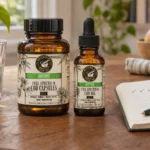
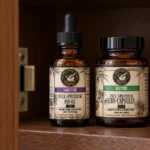
Take our Daytime and Nighttime CBD Capsules. Each capsule contains 25 mg of CBD and 1 mg of naturally occurring THC. That 25-to-1 ratio comes from the hemp flower we grow. We call the extract full-spectrum because we keep the mix of compounds naturally present in the flower. We don’t add THC to get anyone high, and a high isn’t the expected effect of the recommended one-capsule starting serving.
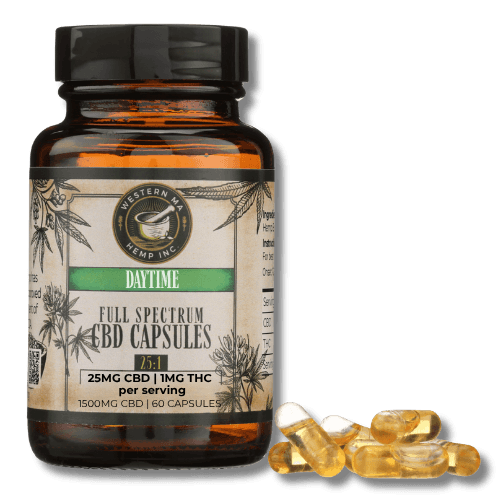
A person taking one capsule gets 1 mg of THC. The law counts all 60 capsules in the bottle and gets 60 mg. Even if we put just one capsule in the bottle, it would still exceed the new limit. That’s how a law aimed at intoxicating drinks reaches someone who buys CBD precisely because they don’t want a high. We break down the measurement in our guide to the 0.4 mg hemp rule.
When did “save hemp” come to mean “save THC drinks”?
The Beer Institute and groups representing licensed cannabis businesses have pushed Congress to close the intoxicating-hemp loophole. On the other side, some of the most visible voices in the “fight for hemp” are asking Congress to keep THC drinks on shelves.
Somewhere along the way, “How do we protect hemp?” became “How do we keep THC drinks on the shelf?” That’s the irony for us as farmers: a company could call it a win for hemp if it gets to sell a seltzer made with THC converted from CBD, while we could lose the right to sell our full-spectrum CBD capsules because we left in the small amount of THC the flower grew naturally.
Imagine Congress raised the limit from 0.4 mg to 5 mg per container. A company selling a 5 mg seltzer would have reason to celebrate. Its can would meet the limit. Our 60-count bottle still wouldn’t. Someone could drink the whole can and consume five times as much THC as someone taking one of our capsules. Yet it’s the capsules that would be over the limit.
That’s what gets lost when the fight over hemp becomes a fight over who gets space in the beer cooler. Beverage companies have people in Washington making the case for their cans. Who’s making the case for the families who put CBD on the map? Prescription Epidiolex isn’t being taken away. But parents who rely on full-spectrum hemp extracts while caring for a child with seizures could lose access to the products they use. If the can stays on the shelf and the family loses access to its bottle, who exactly won the fight for hemp?
What we’re fighting for at Western MA Hemp
We started Western MA Hemp as two guys who wanted to grow good hemp for people who needed it. Going on eight years later, what stays with us are the conversations: people living with pain or anxiety, people dealing with symptoms during cancer treatment, parents worried about a child’s seizures. Those conversations shaped what we chose to grow and make. They’re also why we left delta-8 alone when the money went that way.
We worried about this farm’s future when we first saw delta-8 at gas stations. By the time THC gummies and drinks filled our social feeds, we knew there was a real chance lawmakers would look at those products, look at ours, and see only the word hemp. We wrote to our legislators to explain the difference. We still don’t have an answer for the customers who ask whether they’ll be able to get their next bottle.
What we’re asking Congress to do is straightforward: regulate products sold for a high, and protect access to full-spectrum hemp for the people who rely on it. If you write to your representatives, tell them what’s in your bottle, why you use it, and what losing it would mean to you. They’ve heard from the beverage companies. They need to hear from you.
We stand for the plant. We stand for the patients. That’s why we started, and we won’t stop fighting for them.