Why Full-Spectrum CBD Oils Differ
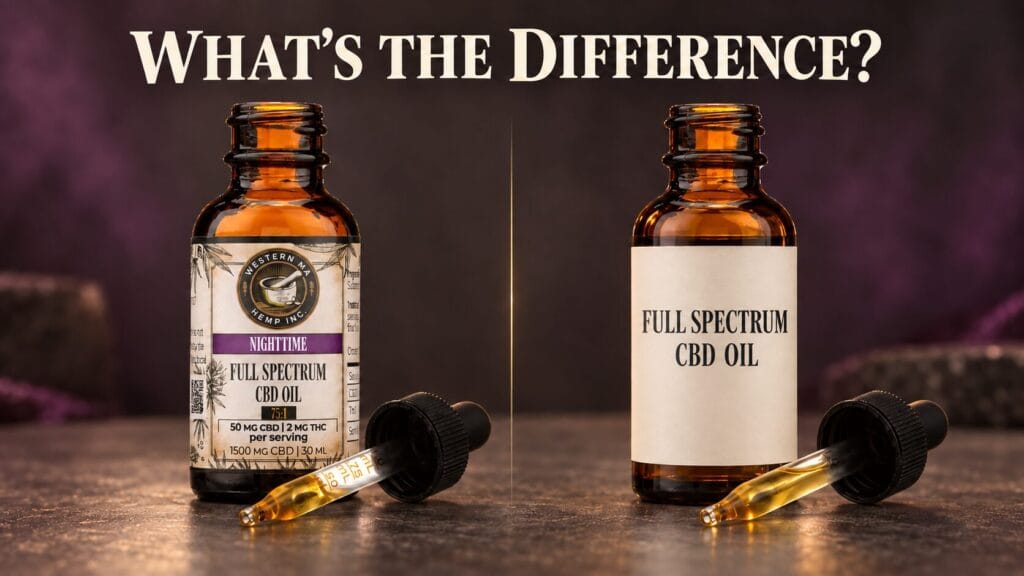
Two CBD oils can carry the same headline specifications and still be entirely different products.
Imagine two CBD oils that appear to match: the same bottle size, the same total CBD, the same serving size, and the same full-spectrum claim. One bottle costs less per milligram, so it may look like the obvious value.
But those front-label numbers do not tell you what kind of hemp extract is in either bottle. They do not tell you which variety was grown, what the flower produced, how much of that natural profile survived extraction, what was refined away, whether the lab report matches the actual batch, or what else was added to make the finished oil.
That is why price per milligram is a weak way to compare CBD oils. It treats CBD as a commodity number when the value of a full-spectrum oil is supposed to be in the wider chemistry of the plant.
The CBD Number Tells You Amount, Not the Whole Oil
Milligrams matter. They tell you how much CBD is represented in the bottle and, together with the serving size, help you understand the strength of a serving.
What they do not tell you is what came with that CBD.
CBD can be delivered as a narrow isolate, a highly refined distillate, or a more complete full-spectrum hemp extract. Each can be formulated to match the same total CBD and serving size. But they do not carry the same collection of cannabinoids, terpenes, flavonoids, natural oils, and strain character.
The number on the front answers one question: how much CBD? It does not answer the questions that determine whether two oils are genuinely comparable.
For the basics of separating the concentrated plant material from the finished bottle, read Hemp Extract vs. CBD Oil.
A Practical Comparison: Two Bottles That Look the Same on Paper
Here is the problem with comparing only the headline specs.
| What the front label says | Oil A | Oil B |
|---|---|---|
| Bottle size | 30 mL | 30 mL |
| Total CBD | The same | The same |
| Serving size | 1 mL | 1 mL |
| CBD per serving | The same | The same |
| Front-label category | Full spectrum | Full spectrum |
At this point, the two oils appear equal. A price-per-milligram calculation treats them as equal, too: divide the price by the total CBD milligrams and choose the lower number.
But the front-label comparison is incomplete. The meaningful differences begin once you look behind those first five lines.
| What to compare next | Oil A makes it clear | Oil B leaves it unclear |
|---|---|---|
| Hemp source | The grower, region, and plant-first process are easy to find | The hemp source is vague or absent |
| Extract | The ingredient list identifies full-spectrum hemp extract | The ingredient list uses broad marketing language without explaining the extract |
| Plant profile | The batch report shows CBD plus naturally occurring minor cannabinoids and terpenes | The report shows CBD alone or cannot be matched to the bottle |
| Formula | A short list shows the extract and carrier oil | Flavor systems, fillers, or extra ingredients make the base oil harder to evaluate |
| Safety and traceability | The batch number connects to complete contaminant testing | The product offers a generic report or a simple “lab tested” claim |
The second table is where comparison actually starts. If Oil B is less expensive per milligram but the rest of the product cannot be verified, it is not a less expensive version of the same oil. It is a different product with the same CBD headline.
Full Spectrum Is More Than a Category on the Front Label
When a product is truly full spectrum, CBD is part of a wider hemp profile. The flower may also contribute naturally occurring minor cannabinoids, aromatic terpenes, flavonoids, and other plant compounds. The exact profile changes with the variety, the growing season, harvest timing, and extraction.
That variation is not a flaw. It is what makes hemp a plant rather than a standardized white powder.
Two growers can work with different varieties. One may produce an earthy, Kush-forward profile. Another may produce a brighter, more citrus-forward flower. Their cannabinoid and terpene ratios may be different even when both extracts are formulated to the same CBD amount.
Then extraction shapes the result again. One process can protect much of what the flower produced. Another can refine the extract until CBD is the main feature left, then formulate it into an oil that still uses full-spectrum language on the front.
Matching CBD milligrams and a full-spectrum claim cannot show you which path the oil took. The batch-specific lab report and ingredient list can.
Our article on going beyond full spectrum explains why preserving the whole plant matters more than using the phrase alone.
Why $/mg Pushes You Toward the Wrong Comparison
Price per milligram is built for comparing identical commodities. It works well when the thing being measured is genuinely the same from one package to the next.
Full-spectrum CBD oil is not just a CBD commodity.
When you divide the price of a bottle by its CBD milligrams, every part of the product outside that one number disappears from the comparison:
- The hemp variety and its natural terpene profile
- How the crop was grown and harvested
- Whether the extract retained naturally occurring minor cannabinoids
- How heavily the extract was refined
- Whether a batch-specific terpene report is available
- The quality and purpose of the carrier oil
- The ingredient list
- The batch match, safety panels, and traceability behind the product
That calculation can make a stripped-down oil look like the best value simply because it is built around the cheapest way to deliver a large CBD number.
It can also make a real full-spectrum oil look expensive when, in fact, you are paying for a more complete extract, a short formula, tested batches, and a traceable plant source.
The point is not that every higher-priced bottle is better. The point is that price per milligram cannot tell you which bottle is better. It is blind to the information that separates one hemp oil from another.
Compare the Extract Before You Compare the Price
Before looking at cost, establish whether the two oils are actually in the same category.
Start with the ingredient list. A straightforward oil should identify the hemp extract and the carrier oil. If the bottle relies on a long collection of flavors, sweeteners, colors, added wellness ingredients, or converted cannabinoids, you are no longer looking at a simple comparison of hemp oils.
Next, look for the type of extract. Is it clearly identified as full-spectrum hemp extract? Is CBD isolate listed? Does the company explain what was preserved from the hemp flower?
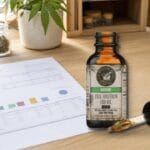
Then compare the batch reports. A complete report should let you match the exact bottle to its cannabinoid profile, terpene profile when available, and safety panels. A large CBD number without that traceability tells you much less than it appears to.
Use our guide to identifying a good full-spectrum CBD oil for the complete checklist of what to examine in the extract, flavor, color, ingredients, and lab results.
The Carrier Oil Is Part of the Formula
Two oils with the same hemp extract strength can be formulated with different carrier oils. That matters because the carrier is not empty space. It is the oil that holds the extract, creates the serving size, and becomes part of every dropperful.
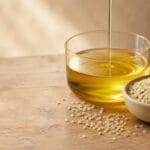
At Western MA Hemp, we use hemp heart oil as the carrier in our products. It is cold pressed from hulled hemp seeds, giving it a mild, nutty character and a naturally golden color. It keeps the finished formula connected to the hemp plant rather than building it around an unrelated base oil and added flavor system.
The carrier does not change the CBD number printed on the front. It does change the finished product you are taking.
Learn why we chose this approach in Why We Use Hemp Heart Oil.
Different Hemp Starts With Different Plants
The same CBD target can begin with very different flower.
Hemp varieties are selected for their own cannabinoid patterns, aromatic terpene profiles, flowering times, and ability to finish in a specific climate. Even the same variety can express itself differently from one season to the next because the growing conditions, weather, and harvest timing change.
That is why sourcing matters. An oil made from anonymous commodity biomass is not automatically equivalent to an oil made from a named variety grown and harvested by the company that formulates it.
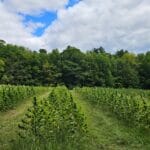
We grow hemp in Western Massachusetts, make deliberate harvest decisions by variety, and work to preserve what the plants produce. The growing process is part of what is in the bottle.
See how the process begins in our Massachusetts hemp fields and why hemp harvest timing matters.

When Price Per Milligram Can Finally Be Useful
Use price per milligram only after the bottles have earned a true side-by-side comparison.
That means both products have a clearly identified extract type, a similar complete cannabinoid and terpene profile, short and comparable ingredient lists, matching batch-specific lab reports, appropriate safety panels, and equally clear hemp sourcing.
Once those details line up, price per milligram can help you choose between genuinely comparable oils. Until then, it is not a value calculation. It is a shortcut that hides the differences.
A Better Way to Compare CBD Oil Value
Instead of starting with “Which one has the lowest price per milligram?”, begin with these questions:
- What exactly is the extract in this bottle?
- Does the batch report show a wider hemp profile than CBD alone?
- Are terpenes present and reported when the company claims a plant-rich extract?
- Does the bottle’s batch number match the lab report?
- Has that batch been screened for the appropriate safety panels?
- Is the ingredient list short and clear?
- What carrier oil is used, and why?
- Can the company tell you where its hemp was grown and how it was processed?
- After all of that, what is the cost per comparable serving?
This puts the plant and the product first, then lets price do its proper job as one part of the decision.
The Best Value Is Not the Cheapest CBD Number
Two CBD oils can share the same headline specifications and still have different origins, different chemistry, different formulas, and different standards behind them.
The bottle with the lowest cost per milligram may be a good choice only when you have confirmed that it is truly comparable to the other bottle. If it contains a narrower or less traceable extract, it is not a bargain version of the same thing.
At Western MA Hemp, we do not reduce our products to the CBD number on the front. We grow hemp for its complete plant profile, use full-spectrum extract, carry it in hemp heart oil, and connect each product to transparent batch testing.
Explore our full-spectrum CBD oils when you are ready to compare more than milligrams.
Frequently Asked Questions
Does the same CBD amount mean two oils are the same strength?
It means the bottles represent the same total amount of CBD. It does not mean they contain the same extract, minor cannabinoids, terpenes, carrier oil, ingredient list, safety profile, or hemp source.
Is the lowest price per milligram always the best CBD oil value?
No. Price per milligram measures the CBD headline number only. It does not account for whether the bottle contains a full, traceable hemp profile or a narrower, more heavily refined formula.
How should I compare two full-spectrum CBD oils?
Compare the extract type, ingredient list, carrier oil, batch-specific cannabinoid and terpene results, safety testing, hemp source, serving size, and total cost. Use cost per milligram only after those details show that the oils are genuinely comparable.
Why can two full-spectrum CBD oils taste different?
The taste can vary with the hemp variety, terpene profile, extraction, amount of retained plant material, carrier oil, and added flavors. A natural botanical flavor is part of what distinguishes one true hemp oil from another.
What should a full-spectrum CBD oil lab report show?
It should match the bottle’s batch or lot number and show CBD alongside naturally occurring minor cannabinoids. A terpene profile is also useful when the company emphasizes preserved plant chemistry. The report should include the relevant safety panels, such as pesticides, heavy metals, microbes, mycotoxins, and residual solvents.