Why CBD Feels Different for Everyone

Illustrative scene. Someone else’s experience can offer context, but their serving size should not automatically become yours.
Two people can take the same amount of the same CBD oil and describe different experiences. One might notice a subtle sense of relaxation. Another might feel sleepy, while someone else notices very little.
The bottle is only part of the equation. Your endocannabinoid system, previous cannabis use, sensitivity to THC, and the way your body processes cannabinoids all help explain why CBD affects everyone differently.
That’s why someone else’s experience can be useful context—but their serving size shouldn’t automatically become yours.
Your Endocannabinoid System Has Its Own Starting Point
The endocannabinoid system, or ECS, is a signaling network involved in functions such as mood, appetite, memory, and the body’s response to discomfort. It includes cannabinoids your body produces, receptors that receive their signals, and enzymes that make and break down those compounds.
The two best-known cannabinoid receptors are CB1 and CB2. Receptor density describes how many receptors are present in a particular area. Their location, availability, and responsiveness also matter.
These characteristics aren’t identical in everyone or fixed throughout life. Differences in cannabinoid receptor availability have been observed between people, and previous cannabis exposure can change the system over time.
This helps explain why cannabinoid responses vary, particularly responses to THC. It doesn’t give us a simple formula where more receptors always means stronger effects—or a way to calculate someone’s ideal serving.
CBD also works differently from THC. It doesn’t activate CB1 receptors in the same way, and its actions extend beyond those receptors. Your response to a CBD product therefore involves more than your receptor count.
Previous Cannabis Use Can Change Your Response
Someone who regularly uses THC-containing cannabis starts from a different place than someone trying hemp for the first time.
Repeated THC exposure can produce tolerance to some effects. The ECS adapts, including changes in CB1 receptor availability and signaling. Human imaging has shown reduced CB1 receptor availability in frequent cannabis users, with recovery after a period without cannabis.
In practical terms, an experienced THC user may find an amount barely noticeable that feels pronounced to someone with little previous exposure.
That history needs context, too. Using cannabis years ago isn’t the same as using it regularly now. Familiarity with CBD-only products also shouldn’t be treated as proof of THC tolerance.
There’s no reason to chase someone else’s tolerance. The useful amount is the one that suits your response and your purpose for taking hemp.
Sensitivity to THC and Psychoactivity Is Personal
CBD itself does not produce the intoxicating high associated with THC. Full-spectrum hemp extracts, however, contain other cannabinoids, including some THC. That THC can matter to a sensitive person, especially as the amount consumed increases. Learn about CBD, THC, and individual effects.
People also differ in how comfortable they are with changes in perception or alertness. A sensation that feels familiar to a regular cannabis user may feel distracting or uncomfortable to a newcomer.
Biological tolerance and comfort with a sensation are related considerations, but they aren’t interchangeable. Feeling accustomed to cannabis doesn’t guarantee that judgment or coordination is unaffected.
For someone who wants to stay engaged in their usual activities, feeling noticeably altered may be an unwanted effect. A stronger sensation is not automatically a better result.
Your Body and Your Routine Matter, Too
Even with an identical serving, the amount that reaches your bloodstream can differ. How you take the product, whether you’ve eaten, and other substances you’re using can influence the experience. Your response can also vary from one occasion to another. These factors affect cannabis response.
This is why comparing “one dropper” with a friend tells you less than it appears to. Beyond individual biology, you may be taking it under different conditions.
Keeping your own routine reasonably consistent makes it easier to understand what a particular amount actually does for you. Our guides to CBD oil versus capsules and taking CBD with food explain those everyday choices.
Find Your CBD Serving Without Copying Someone Else’s
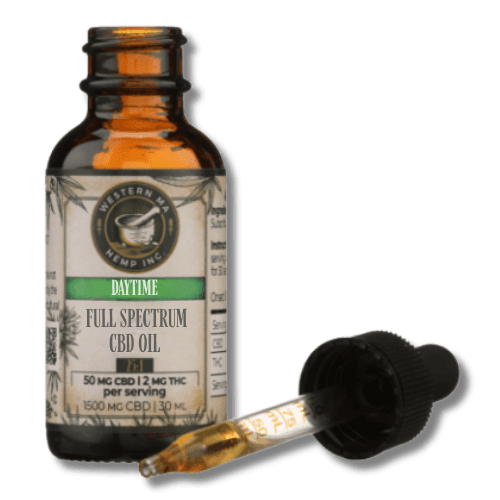
A useful approach is to make small, deliberate decisions:
- Know what you’re taking. Check the product’s directions, serving size, and cannabinoid information, including THC. Our guide to reading a hemp product lab test shows you where to look.
- Start conservatively. If you’re new to hemp or sensitive to THC, don’t begin with an experienced user’s amount.
- Give it time. Swallowed products have delayed effects. Avoid adding another serving simply because you haven’t noticed an immediate change.
- Change one thing at a time. Keeping the product, timing, and meal routine consistent makes adjustments easier to evaluate.
- Pay attention to useful changes and unwanted effects. Notice how you’re functioning, not just whether you feel something dramatic.
CBD can cause drowsiness and interact with medications. If you take medication, check with your pharmacist or clinician before adding it; avoid driving if you feel sleepy or altered. Read about CBD safety and interactions.
At Western MA Hemp, we want people to understand both the plant and their own experience with it. A friend’s recommendation can introduce you to a product. Your response should guide whether it belongs in your routine—and how you use it.