What Is Cannabigerol (CBG)?
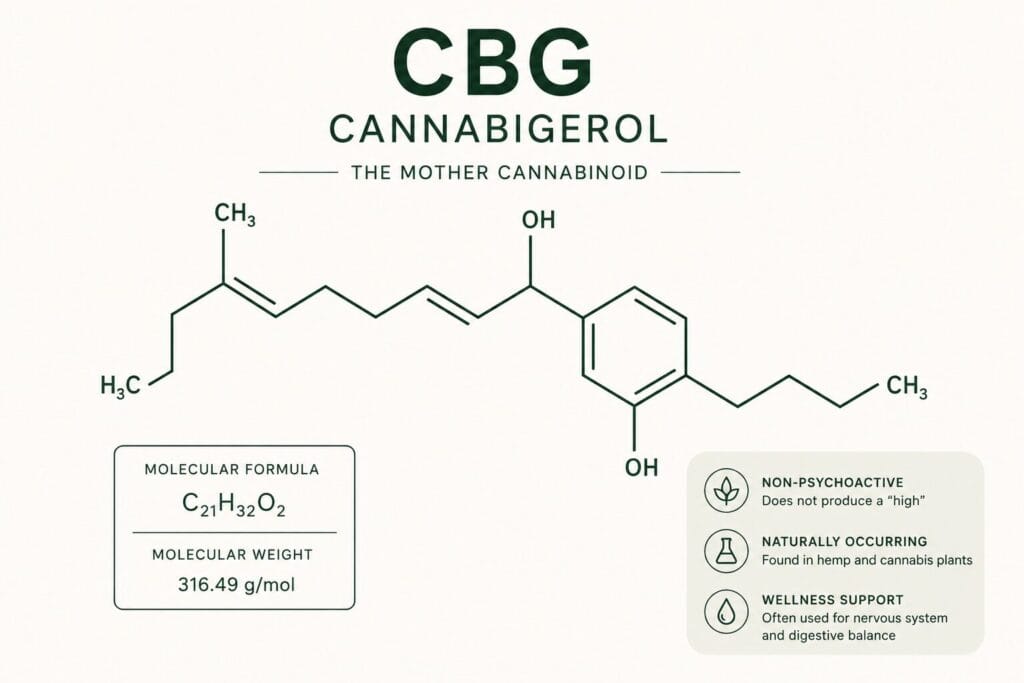
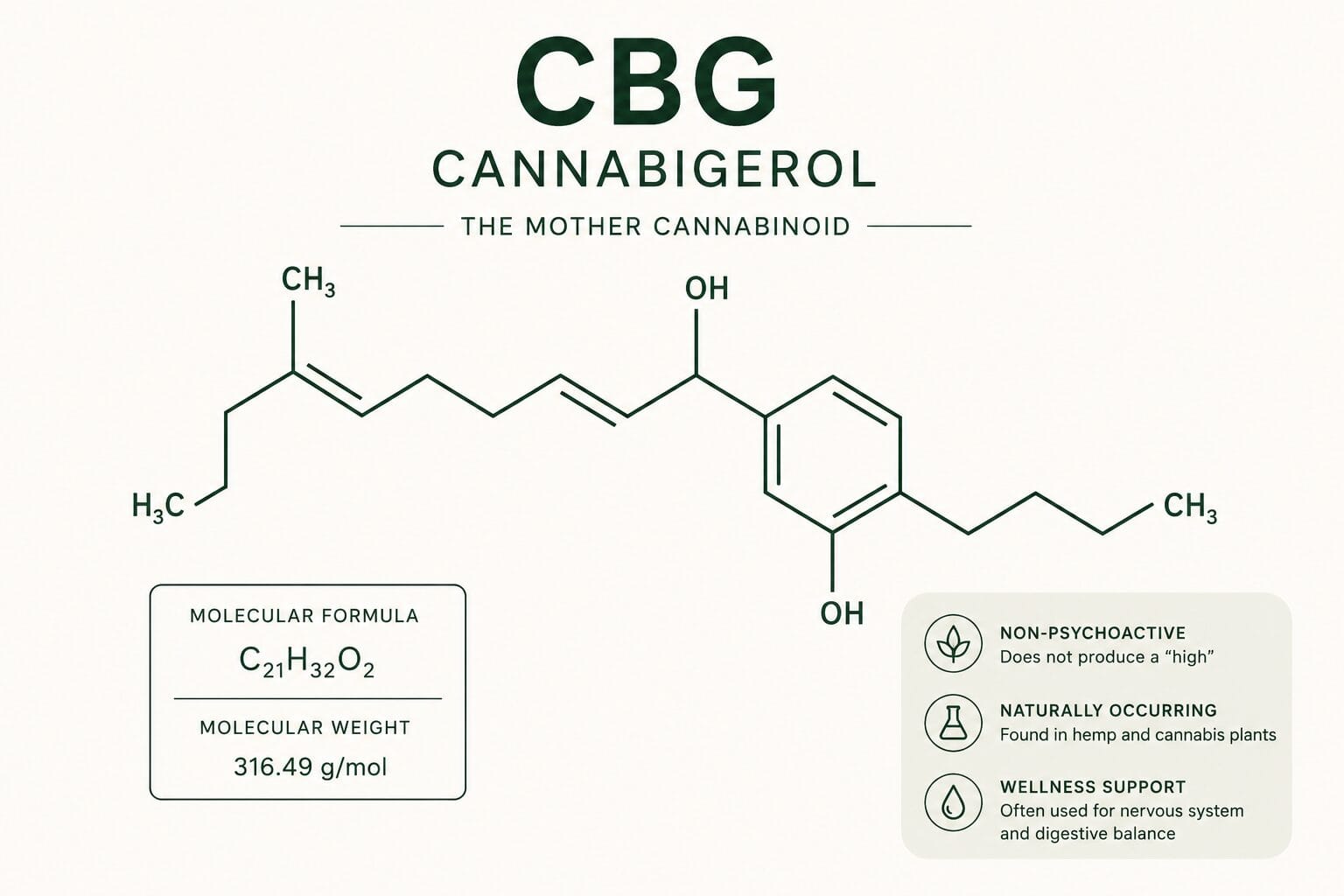
When most people think about hemp, they usually think of two cannabinoids: CBD and THC. CBD is known for being non-intoxicating and widely used in wellness products. THC is known for producing the "high" associated with cannabis.
But hemp is much more complex than just CBD and THC.
The hemp plant produces many different cannabinoids, and one of the most useful lesser-known ones is CBG, short for cannabigerol. CBG is gaining attention because it offers a different hemp experience than CBD, while still coming from the same plant family. It also fits directly into how Western MA Hemp thinks about hemp: as a whole plant with different varieties, different cannabinoid profiles, and different uses for real people.
If you want a broader foundation before getting into CBG, start with our guides on what hemp is, why the hemp plant is greater than CBD, and how cannabinoids work with the body through the endocannabinoid system.
What Is CBG?
CBG is a naturally occurring cannabinoid found in hemp. Like CBD, it is non-intoxicating, meaning it does not produce the high associated with THC. Research on CBG is still developing, so it is best understood as an emerging hemp compound rather than a cure or treatment for any condition.
In practical terms, CBG is another way to experience what hemp has to offer. It is often used by people who are looking for support with balance, comfort, and day-to-day wellness, especially when they want a product that is not focused on THC.
That is one reason Western MA Hemp offers CBG-specific products, including Full Spectrum CBG Oil and Full Spectrum CBG Capsules. These products are built for people who want a CBG-forward routine instead of a standard CBD-only routine.
There Is More to Hemp Than CBD and THC
CBD and THC are the most familiar cannabinoids, but they are not the only ones that matter. Hemp plants can be bred and grown to emphasize different cannabinoid profiles.
That is where CBG-dominant hemp varieties come in.
At Western MA Hemp, this matters because we are not just buying generic hemp ingredients and putting them into bottles. We care about the plant itself, the varieties being grown, the cannabinoid profile they naturally produce, and the testing that confirms what is actually in the finished product. You can read more about that approach on our Our Hemp page, our Our Extract page, and our post on why we still grow hemp in Massachusetts.
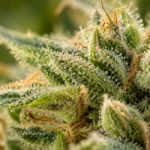
CBG-dominant hemp plants can look very similar to other cannabinoid-rich hemp plants. The difference is not really in the way they look. The difference is in the plant’s chemistry.
A CBD-dominant hemp plant is grown to produce more CBD. A CBG-dominant hemp plant is grown to produce more CBG. The flower, structure, aroma, and appearance may look familiar, but the cannabinoid profile is different.
CBG and THC Are Not the Same Thing
One of the most important things to understand about CBG is that it is not THC.
CBG does not produce an intoxicating high. CBG-dominant hemp varieties are also selected and grown to produce virtually no THC, or only trace levels depending on the plant and final product testing. Under federal hemp rules, hemp is distinguished from marijuana by its THC concentration, with hemp generally required to remain at or below 0.3% THC on a dry-weight basis.
For customers who want hemp without the effects of THC, CBG can be a useful option. As with any hemp product, the best way to confirm what is in it is to review the product’s certificate of analysis, or COA, from a third-party lab. Western MA Hemp keeps lab testing central to the buying process through our Lab Tests page. If you are not sure how to read a COA, our guide on how to read a hemp product lab test walks through potency, THC, full-spectrum markers, and contaminant screening.
If you are comparing CBG with THC-focused products, our article on the truth about hemp-derived THC is a helpful next read.
Why People Use CBG
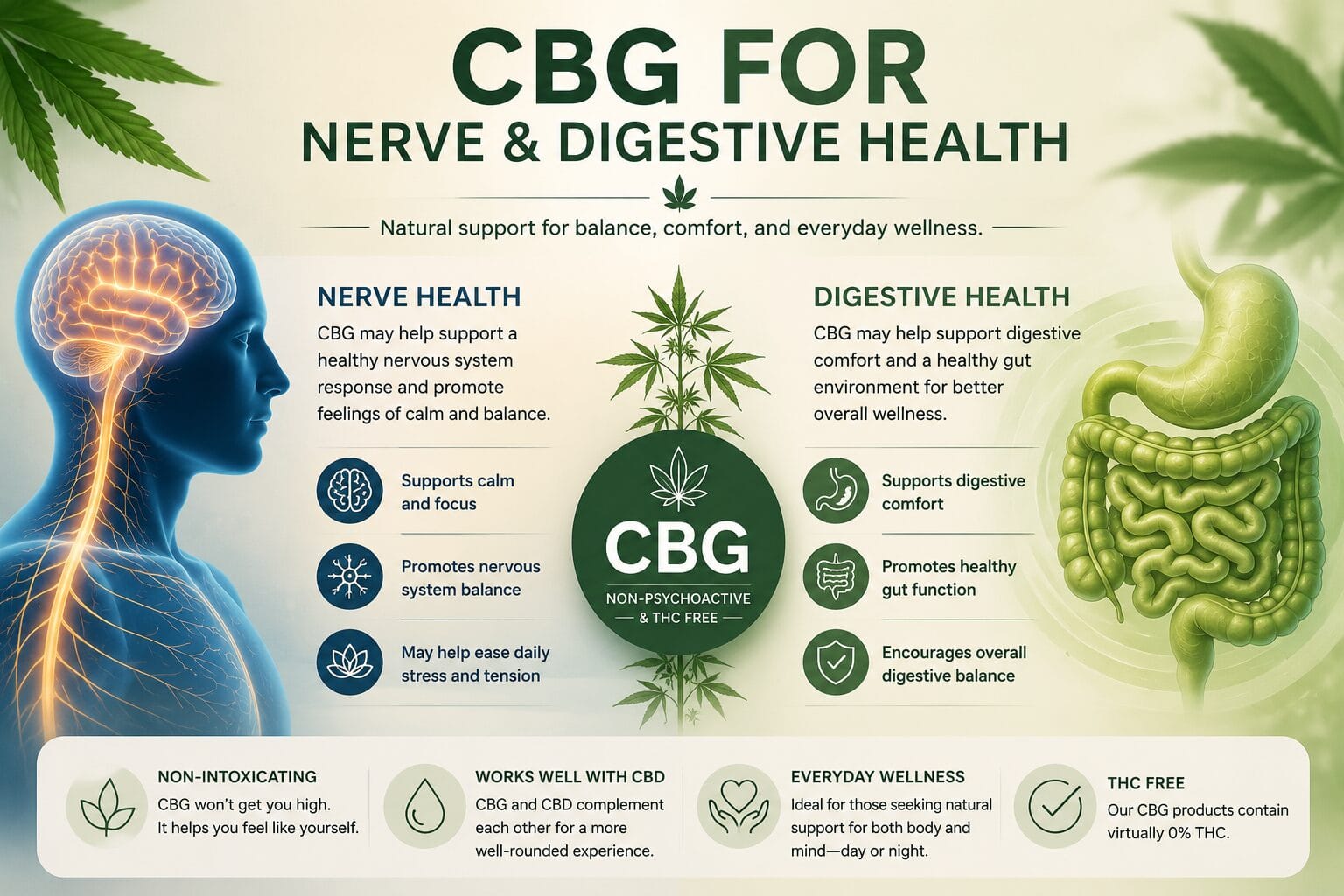
Our experience with CBG has shown that many people are especially interested in it for nervous system support and digestive comfort.
That does not mean CBG should be viewed as a medical treatment. It means that, in everyday use, people often reach for CBG when they want help feeling more settled, balanced, and comfortable in their routine. Early research has also explored CBG in areas related to mood, stress response, inflammation, and digestive health, but the science is still developing and more human research is needed.
From a practical standpoint, people often describe CBG as feeling a little more clear or functional than CBD. Some prefer it during the daytime. Others like combining it with CBD for a more rounded hemp experience.
This is also why CBG fits naturally beside Western MA Hemp’s broader full-spectrum approach. We have written before about going beyond full spectrum: the goal is not just to chase one buzzword, but to understand how different cannabinoids and plant compounds contribute to a more complete hemp experience.
CBD and CBG Can Work Well Together
CBD and CBG do not have to be used separately. In fact, many people find that they complement each other.
CBD is often chosen for general calm, recovery, and daily balance. CBG is often chosen by people who want something a little more targeted toward focus, comfort, digestive ease, or nervous system support. Used together, they can provide a broader cannabinoid profile than CBD alone.
A simple way to think about it:
- CBD is the familiar foundation.
- CBG adds another layer.
- Together, they give you a more complete hemp experience without relying on THC.
If you are still figuring out which product type makes sense, our post on how much hemp extract to take can help you think through serving size and consistency. Our guide on what to expect when taking hemp is also useful for setting realistic expectations.
Natural CBG vs Converted Cannabinoids
One reason CBG deserves a closer look is that it can be grown directly in CBG-dominant hemp. That separates it from some rare cannabinoid ingredients that are often made by converting CBD into something else.
That distinction matters to Western MA Hemp. We believe customers should know whether a cannabinoid was naturally produced by the plant, extracted from hemp, or created through conversion chemistry. CBG can be a good example of a cannabinoid that is naturally produced in meaningful amounts when the right hemp genetics are used.
For a deeper explanation, read our guide to converted cannabinoids. It explains why words like "hemp-derived" and "naturally occurring" do not always tell the whole story.
How to Use CBG
The best way to use CBG is to keep it simple.
Start with a small serving and use it consistently. Hemp products often work best when they become part of a regular routine rather than something used once and judged immediately.
For daytime balance, many people prefer taking CBG in the morning or early afternoon. For digestive comfort, some prefer using it before meals or as part of their daily wellness routine. For a broader effect, CBG can also be paired with CBD in the same product or used alongside a CBD product.
A practical starting approach:
- Take a low serving of CBG.
- Use it at the same time each day.
- Pay attention to how you feel over several days.
- Adjust gradually as needed.
- Consider combining CBD and CBG if you want a more balanced effect.
Always follow the serving instructions on the product label, and speak with a healthcare professional before using hemp products if you are pregnant, nursing, taking medication, or managing a medical condition. The FDA continues to caution consumers that cannabis-derived products can raise safety, quality, and labeling concerns, especially when companies make unapproved health claims.
Where Western MA Hemp Comes In
Western MA Hemp comes into the CBG conversation in a practical way: we grow, source, formulate, and test hemp products with the plant’s chemistry in mind. CBG is not just another acronym for a label. It is a different cannabinoid profile, and it should be treated that way from seed selection through extraction, formulation, and lab testing.
Our Full Spectrum CBG Oil and Full Spectrum CBG Capsules give customers a simple way to try a CBG-forward hemp routine without focusing on THC. The product pages explain serving size, ingredients, and intended use, while our lab results help verify the cannabinoid profile behind the product.
For customers who want to understand the company behind the bottle, the best next stops are About Us, Our Hemp, and Our Extract.
The Bottom Line
CBG is one of the most useful cannabinoids for people who want to explore hemp beyond CBD and THC.
It comes from the same plant family, and CBG-dominant hemp varieties can look very similar to other cannabinoid-rich hemp plants. What makes them different is their chemistry. Instead of producing a CBD-dominant or THC-rich profile, these plants are grown for CBG while producing virtually no THC.
For people looking for a non-intoxicating hemp option, CBG is worth understanding. It may be especially useful for those interested in nervous system balance, digestive comfort, and a clear-headed daily hemp routine. CBD and CBG can also work well together, making them a strong combination for anyone who wants a more complete hemp experience.
To keep learning, browse the Western MA Hemp CBD Blog, start with The Hemp Plant > CBD, or compare CBG with the broader cannabinoid conversation in Going Beyond Full Spectrum.